

The name of American tennis player Renée Richards became widely known in the 1970s. The reason for her fame was that she was born a man and later transitioned to become a woman. Because of this, Richards was denied entry into the 1976 US Open. The United States Tennis Association (USTA) introduced a rule requiring players to undergo genetic screening. Renée refused the procedure and filed a lawsuit. Find out more about what happened next and the story of this courageous tennis player. Read on at newyorka.
Early Life
The future tennis star was born in New York City as Richard Raskind on August 19, 1934. By her own account, she grew up as a model Jewish boy in a good family. Her father, David, was an orthopedic surgeon, and her mother was a psychiatrist—one of the first women in the field in the US. She also taught at Columbia University.
His parents enrolled him in the private Horace Mann School. In addition to his studies, he excelled at football and tennis, was the pitcher for the baseball team, and was a talented swimmer. His success in baseball led to an invitation to join the New York Yankees, but he chose to pursue tennis instead.
After graduating from high school, he attended Yale University, where he captained the men’s tennis team and showcased a high level of play. He then went on to the University of Rochester Medical Center, specializing in ophthalmology. In 1959, he began an internship at Lenox Hill Hospital in New York City. After two years, he started his residency at the Manhattan Eye, Ear and Throat Hospital. During this time, Richard continued to play tennis and compete, ranking 6th among the top 20 players over 35.
After completing his medical education, he joined the U.S. Navy but didn’t give up tennis. During his service, he won both the singles and doubles titles at the All-Navy Championship and was ranked fourth in his region.
Man or Woman: A Journey to Her True Self
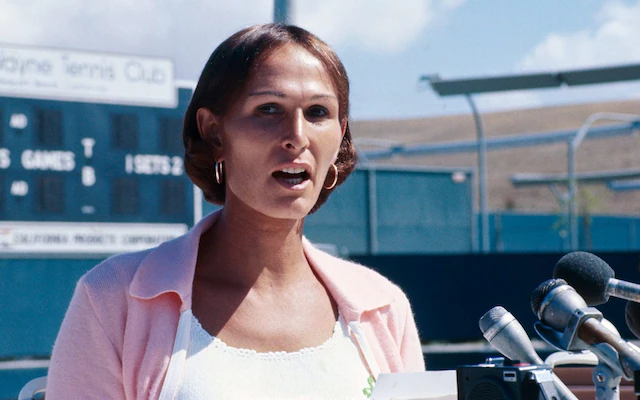
While still in college, Richard began to feel different and experienced a strong desire to be a woman. He often dressed in women’s clothing, which was very risky at the time. This behavior was widely viewed as a sign of insanity or perversion. Nevertheless, the young man chose to listen to his inner feelings, even as he battled depression and suicidal thoughts.
During this period, he created the alias Renée Richards and met Dr. Charles Ihlenfeld, an endocrinologist who specialized in transsexualism and gender reassignment. Renée began receiving hormone injections, marking the first step in her transition.
In the 1960s, she traveled through Europe dressed as a woman. Her goal was to reach Casablanca to see the renowned gynecological surgeon Georges Burou. However, Renée couldn’t go through with the surgery there and returned home to the United States.
Her doubts about transitioning were so profound that in 1970, Richards married a model named Barbara Mole. The couple had a son two years later, but they divorced in 1975.
After the divorce, Renée committed to transitioning and was referred to surgeon Roberto C. Granato Sr. Following a successful surgery, Richards moved to California, where she started her own ophthalmology practice.
Tennis Career
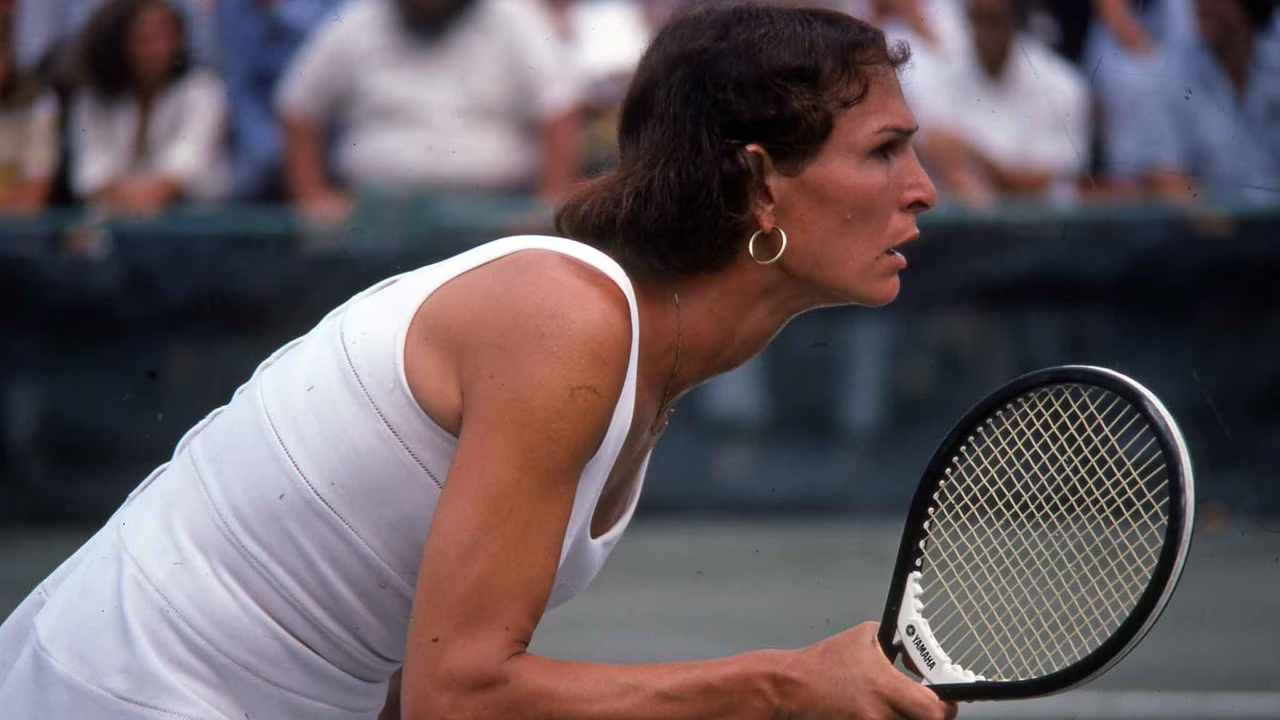
Tennis always remained an important part of Renée’s life. After moving to California, she began training at a local club under the name Renée Clark and participated in regional competitions.
In 1976, she competed in the La Jolla Tennis Tournament, where she delivered an excellent performance. Her unique left-handed serve was particularly memorable. Following this success, she began receiving invitations to professional tournaments, such as the Tennis Week Open. At the same time, questions about her gender arose. The USTA decided to implement genetic screening and exclude Renée from professional tournaments.
Richards chose to fight for her rights and played professional tennis from 1977 to 1981. She officially retired from her sports career at the age of 47. During her time as a professional athlete, she:
- Competed as a woman in the 1977 US Open, reaching the doubles final and winning the 35-and-over women’s singles title.
- Achieved a career-high ranking of 20th in the world in 1979 and won the singles title at the Open championship that same year.
- Reached the mixed doubles semifinals at the US Open twice.
Later, Renée also worked as a coach. In 2000, she was inducted into the USTA Eastern Tennis Hall of Fame, and in 2013, she was inducted into the National Gay and Lesbian Sports Hall of Fame. In 2014, her favorite wooden racket was donated to the National Museum of American History.
The Court Case and Sports
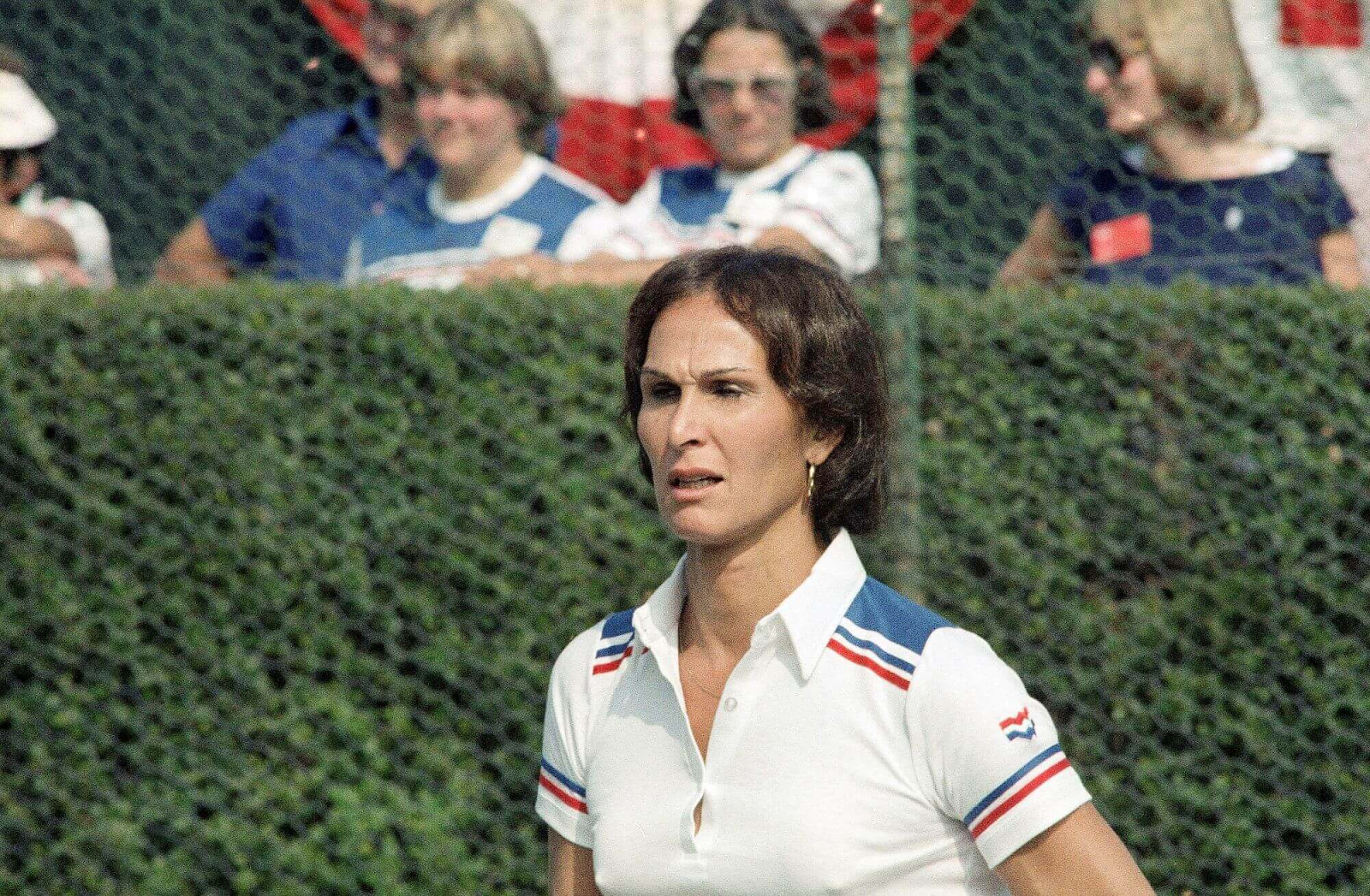
In 1976, TV host Richard Carlson revealed that Renée Richards was a transgender woman. Following this revelation, the USTA, the Women’s Tennis Association (WTA), and the US Open Committee decided to require genetic screening for all female competitors. In their view, only those born as women could participate in women’s tournaments.
Despite this, Richards applied to play in the US Open as a woman but refused the screening. That year, she was barred from all professional competitions. She responded by filing a lawsuit against the USTA in New York State Supreme Court, alleging gender discrimination in violation of the New York Human Rights Law.
The court case attracted significant media attention. Richards believed that competing in the tournament would validate her right to be recognized as a woman. The USTA argued that, having been born male, Renée possessed an unfair physical advantage over cisgender women. The athlete eventually underwent a screening, but the results were inconclusive. She refused a second test and was not allowed to compete.
In the summer of 1977, the court ruled in Richards’ favor. The ruling stated that the plaintiff was legally a woman and that the requirement to undergo genetic screening was “grossly unfair, discriminatory, and inequitable.” Furthermore, the USTA was accused of intentionally discriminating against Richards. She was granted permission to play in the US Open, where she went on to reach the doubles final.
It is worth noting that after retiring from sports, Renée expressed mixed feelings about the situation. She acknowledged that she might have had a physical advantage over other women, having been born male and trained extensively from a young age.
Life After Retirement and Legacy
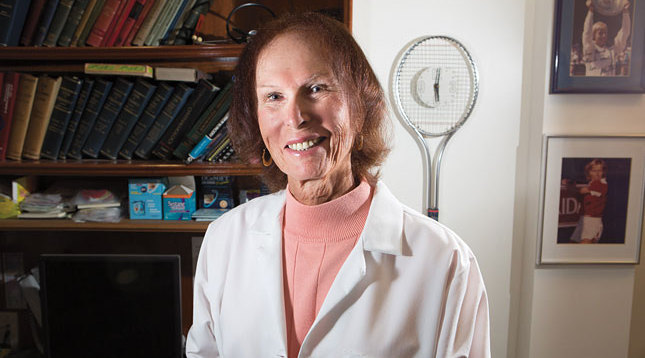
After retiring from her sports career, Renée Richards settled in New York City and returned to her medical practice. She worked as an ophthalmic surgeon and directed the eye muscle clinic at the Manhattan Eye, Ear and Throat Hospital. She also served on the editorial board of the Journal of Pediatric Ophthalmology and Strabismus.
In 2025, Renée Richards celebrated her 91st birthday. She currently lives in a small town north of New York City with her assistant, Arleen Larzelere.
Her life story continues to captivate the public. In 1983, she published her autobiography, “Second Serve,” which was later adapted into a film of the same name. In 2007, she released a second book titled “No Way Renée: The Second Half of My Notorious Life.” In 2021, the tennis player wrote “A Diary from 1999: An Eye-Opening Medical Memoir.”
A documentary about the tennis player was released in 2011, and in 2017, an interview with her was featured in the documentary “The Transgender Tipping Point.” Renée Richards has no regrets about her transition but never sought to become famous for it.