

New York is the world’s youngest fashion capital. This was the birthplace of fashion trends for many decades. Hat fashion trends were no exception. In particular, hats became an essential accessory for both men and women in the 20th century. But what were they like, and how did they influence trends?
Fashion for hats in the first half of the 20th century
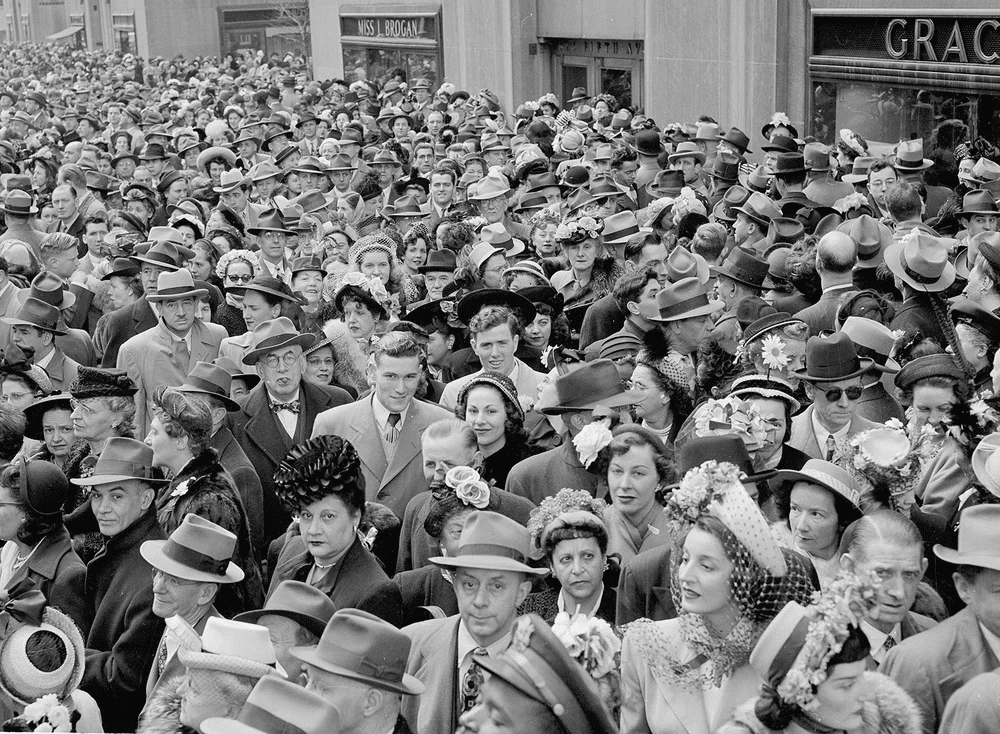
In the twentieth century, the fashion for women’s hats in New York changed significantly. The hats varied in style, shape, size and color. They reflected the social and cultural changes that occurred over a specific decade.
Hats have always been an essential feature of women’s wardrobes. At all times and epochs, women have covered their heads with various caps, hoods and hats. In ancient times, it was more a necessity than an object of beauty or luxury. The styles of women’s hats also evolved with time. So, around the turn of the twentieth century, hats became a fashion accessory, complementing the looks of New Yorkers.
The most popular hats in New York during the 1900s were small ones that sat on top of the head on a mound of hair. However, such headwear quickly went out of style, and New Yorkers began to wear hats floating above their heads, which were frequently referred to as “flower pots”.
The 1910s saw the rise in popularity of large hats. Hats with wide brims that extended to the owner’s shoulders became fashionable. To keep the hats on their heads, New Yorkers used hat clips to attach them to their hair. Such a hairpin could be longer than a foot.
At the same time, large feathers and floral embellishments were typical fashion features of the era. However, with the outbreak of World War I, the fashion trend for hats changed again, and small hats were fashionable again. The military conflict forced New Yorkers to dress more simply, as a luxurious look was seen as unpatriotic.
In the 1920s, there was a fashion for women’s cloche hats in New York. They were shaped like a bell and almost fully covered the owner’s head. At the same time, whereas before women’s hats were mostly embellished with enormous feathers and flowers, the cloche hat’s design was distinguished by carefully thought-out shape detailing with felt waves and curls. Another distinctive feature of such hats was that they had no brims.
In the 1930s, large brims returned to fashion, and fedora hats (traditionally worn by men) were combined with custom-made suits.
The crisis and the military 1940s both had an impact on the fashion for women’s hats in New York. New Yorkers continued to wear a variety of hats during the war. The headdresses of the 1940s were unique in that they were excessively adorned. Feathers, veils and artificial flowers could all be found on the same hat. During World War II, New Yorkers had an entirely different style than during World War I.
In the 1940s, there was also a demand for doll hats in New York. They were extremely small and resembled Victorian hats. Turbans were also trendy. They covered most of the woman’s hair.
The decline in New York fashion for hats in the second half of the 20th century
Before the 1950s, no New Yorker could leave the house without a headpiece. Since then, more women have started going outside without hats, and those who did wear hats preferred the most extravagant looks. Pancake hats, cartwheel and wide-brimmed flat hats were particularly popular in New York City throughout the 1950s.
The 1960s saw a significant decline in the wearing of hats in New York City. All of this resulted from fashion starting to focus primarily on young people. Hats were thus regarded as an echo of the past. Hats as an everyday accessory, except for the colder months, had almost gone away by the end of the decade. Although there have been occasional revivals in hat fashion, the hat as an everyday accessory faded out in the 1960s.
It is worth noting that in the 1960s, the famous New York resident Jackie Kennedy brought the pillbox hat to fashion.
Why did hats go out of fashion?
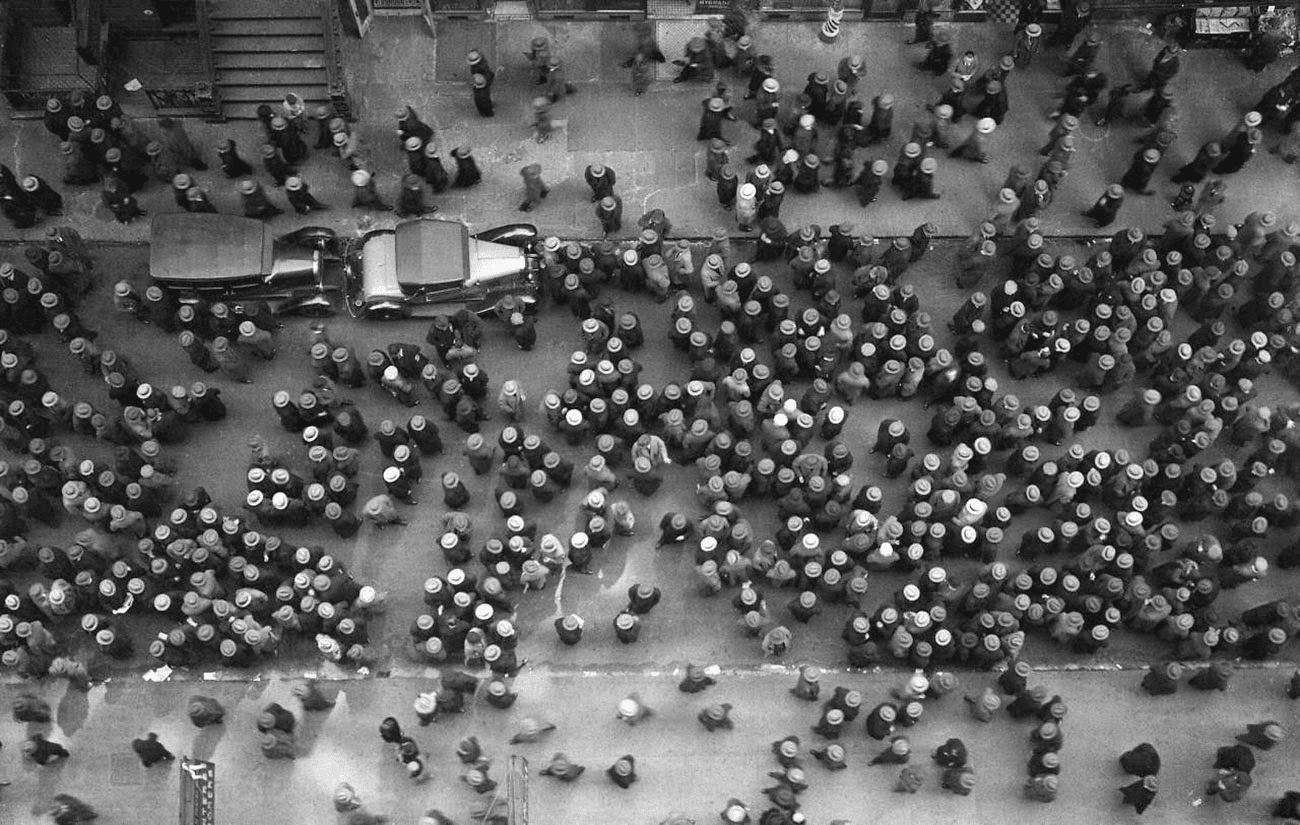
In a photo taken by Margaret Bourke-White in New York City in the 1930s, you can see that every single person on the street is wearing a hat. During the first half of the twentieth century, neither men nor women went out without a headpiece. Going out on the streets of New York without a hat was like leaving the home without shoes. However, throughout time, hats as an everyday accessory have been replaced by other fashion trends.
Hats went out of fashion among both men and women for a variety of reasons, including:
- Prevalence of cars as the main means of transportation. The hats were massive and caused a lot of inconvenience. They have become impractical and useless in a car.
- Fashion for men’s and women’s hairstyles. If earlier men did not pay much attention to their hair, by the middle of the twentieth century, thanks to Elvis, Marlon Brando and James Dean, new fashion trends emerged, contributing to the withdrawal from traditional headwear.
- Culture and television. The 1960s saw considerable cultural changes, including a swift rise of youth countercultural movements (beatniks and hippies). These movements promoted a casual, nonconformist style that defied established dress standards, such as wearing hats.
The second part of the twentieth century in New York City saw a shift toward a more casual style of clothes, which resulted in a complete rejection of the everyday wearing of hats.