

The fashion industry of New York has long been known as a major part of the city’s economic and social life. Its history started in the 19th century, when the city became one of the main centers of clothing production. At the end of the 20th century, New York emerged as one of the world’s fashion centers, which fascinates with its unique creativity, special style and innovation. The most popular designers and talented novices come here from all over the world to show their collections and become famous. Newyorka tells more about this fashion world.
Clothing as a way of self-expression in a chaotic city
Life in a big city dictates different rules and their residents face unique challenges. New York was no exception and became one of the leading fashion centers in the 19th century. Clothing was and stays an important tool for self-presentation and mediating relationships with others, especially in such large urban centers as New York. Its residents must dress and behave differently every day to stand out from the crowd and not to get lost in communication with strangers.
The realities of life in the middle of the 19th century forced New Yorkers to dress in such a way as not to fall into the hands of swindlers and criminals. The latter actively searched for naive villagers. Such citizens easily trusted strangers, who could sell gold-plated watches at the price of gold.
However, what did it mean to look like a New Yorker? This concept changed over the decades and revealed the evolution of nineteenth-century ideas about city life and the appearance of citizens. Still, its main trend has always been self-expression and self-identification.
The power of simplicity and good manners
At the beginning of the 19th century, it was believed that a person’s appearance is closely related to his inner nature. We observe the embodiment of the ideals of simplicity and good manners in 1828, on Broadway in the small park of Bowling Green. In the old photos, one can trace the main idea of the appearance of New Yorkers. It was an imperceptible social interaction between people. The status of the citizens of the new nation was determined by their similar behavior and clothing.
The republican way of dressing allowed people to identify themselves as members of a community of a single social level, equally aware of the standards of proper behavior.
Men, women and children were dressed in simple, carefully tailored clothing. Both sexes revealed self-discipline and modesty. Thin lines without fussy ornaments, a narrow cut of clothes, which pulls the shoulders back and stretches the chest, ensured the restraint of the silhouette of a fashionable citizen of those times.
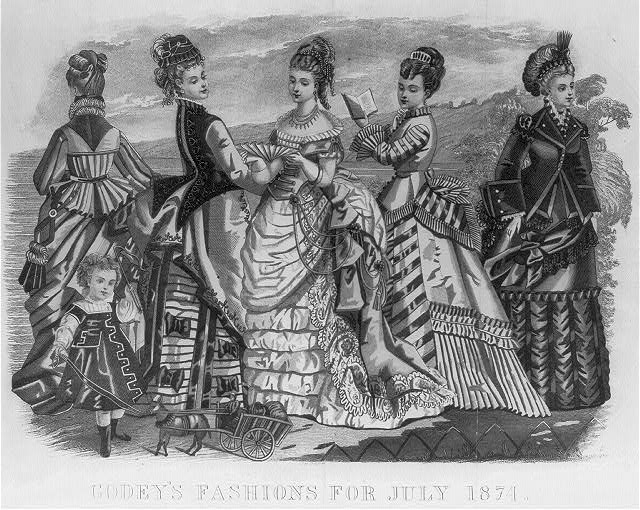
Stylish locals prefer beautifully decorated clothing
After the completion of the Erie Canal construction, which connected the Great American Lakes with the Atlantic Ocean through the Hudson River, the life of the townspeople became brighter. The New York of that time was prosperous and the city’s architecture boasted the grandeur of the Empire City. The residents also sought decoration to elevate New York to a higher level and claim the title of the most elegant city in the world.
The fashion trends of the 1830s reached new heights in the excessive embellishment of clothing and in a wide variety of patterns. Stylish young ladies adored bell-shaped skirts, giant puffy sleeves and elaborate, high hairstyles of the Romantic era. Men wore suits of rich colors combined with tall top hats.
Some fashion critics began to express the opinion that such ostentatious behavior and elaborate layering of clothing was fake and insincere. This provoked negative sentiments in society.
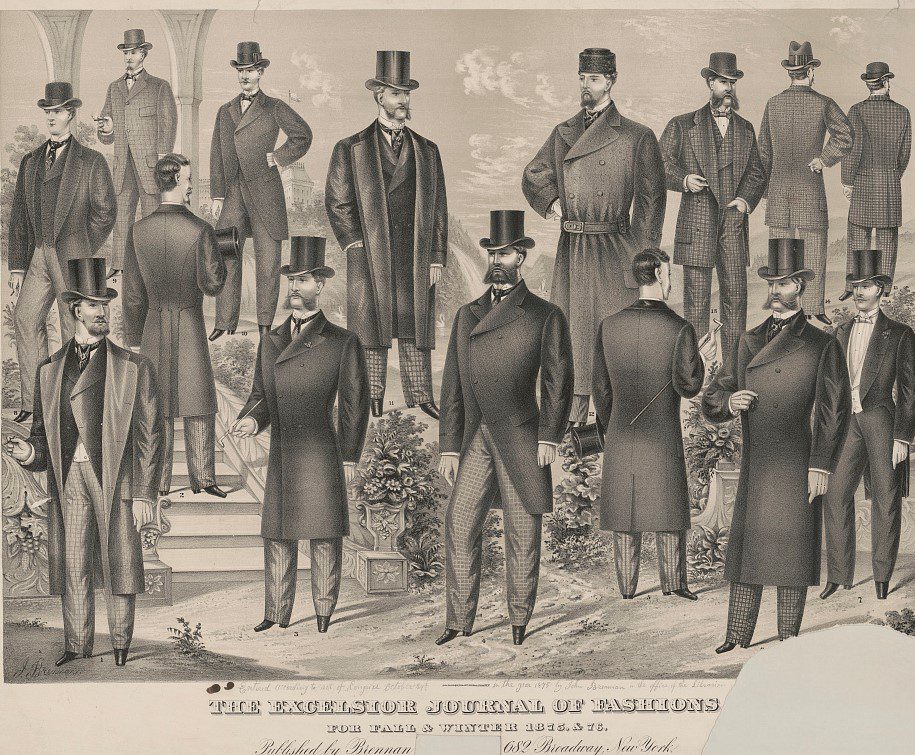
Sentimental fashion of the 1840s
The character of a women’s dress later became restrained. They chose a smaller amount of jewelry in order not to distract attention from their natural beauty. The face was framed by the hair skilfully tucked behind the ears. An attractive woman of that time took care of her appearance. The sentimental fashion of the 1840s claimed that beauty lies in the inconspicuous elements which revealed the soul.
The popular American women’s magazine of that time Godey’s Lady’s Book published various options for how a wealthy urban woman could dress. In each image, the inner beauty of a woman was necessarily emphasized.
New York young ladies, following fashion trends, bought those items of clothing that emphasized beauty, avoiding and refusing those that hid it. Later, they began to use jewelry and accessories more actively to demonstrate or emphasize their appearance.
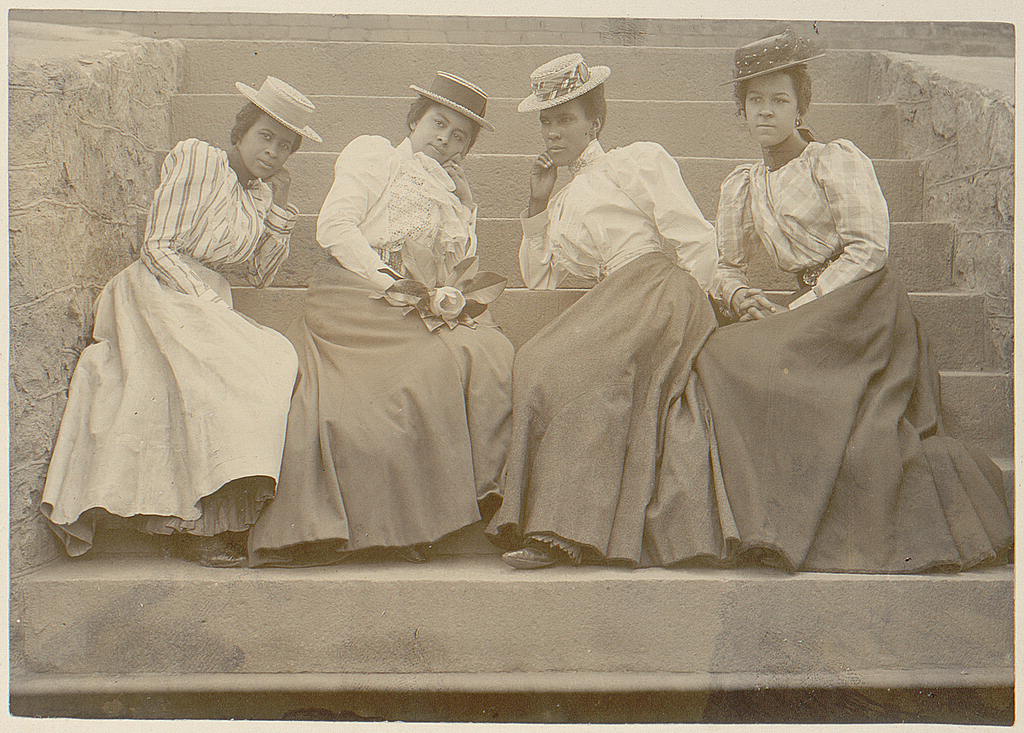
Fashionable Broadway as the epicenter of class inequality
Beautiful young ladies, scrupulously dressed dandies and their charming children gathered on Broadway, the main street of the city and the most fashionable embankment. However, there were other townspeople, poor and needy, dressed in simple clothes, which clearly differed from the wealthy locals. Thus, Broadway Street became the epicenter of social and financial inequality that existed among the population of New York.
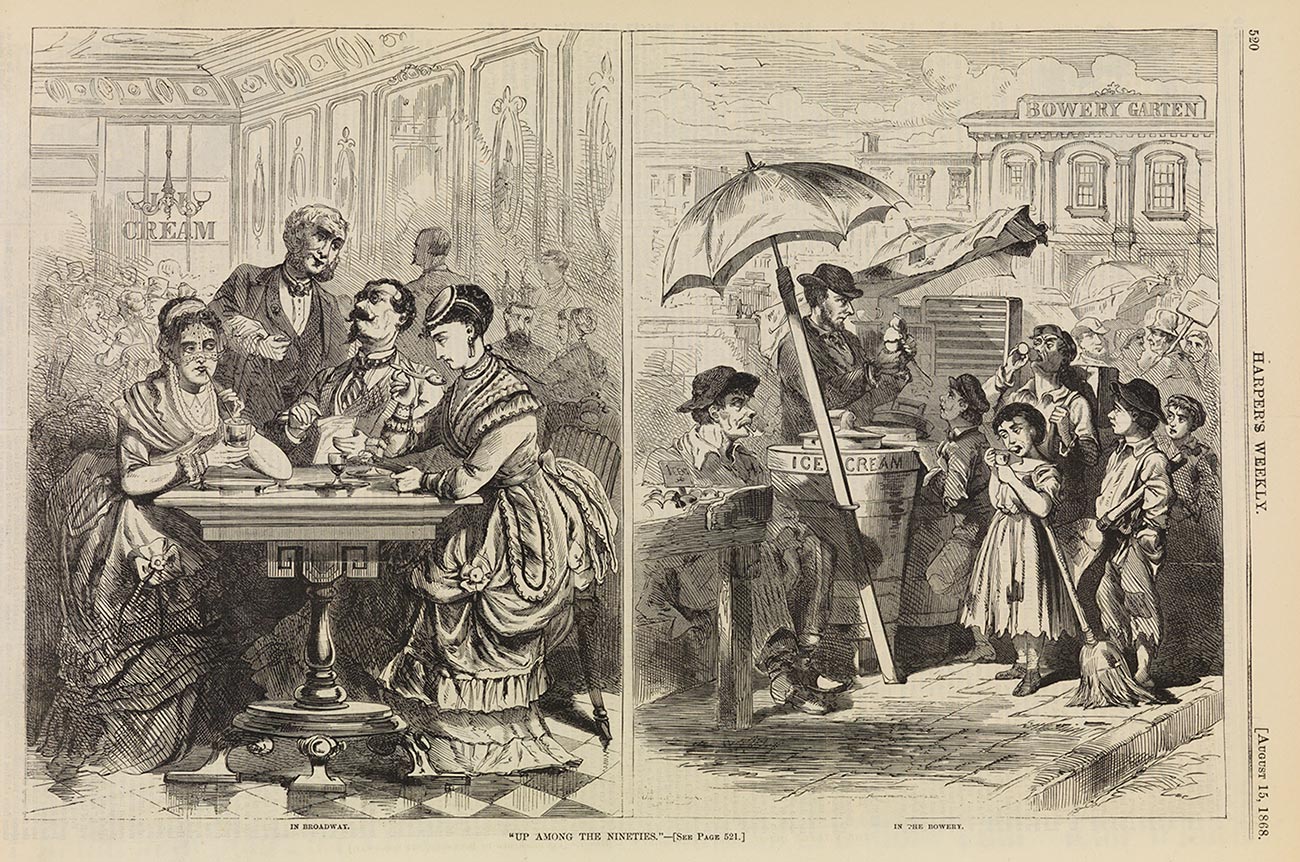
Photos on the pages of the American political magazine Harper’s Weekly depicted the deep differences between the crowds that were involuntarily communicating on Broadway. Well-dressed townspeople usually look down to avoid socializing with those they consider inferior.
In the 19th century, New Yorkers wear rich but unobtrusive clothing, embodying the character of the savvy city dweller. Such a person stood apart from the inflated pretensions of small-town society and the boisterous group of plebeians who congregate in the Bowery District. As the economic gap between classes deepened, so did the importance of clothing as a tool for class identification.
Fashionable items become available for all New Yorkers
With the development and spread of democratic values in society, better quality clothes became available to everyone. In turn, the elite of New York tried to stay one step ahead, switching to another fashion as soon as the previous trend was picked up by those with less social influence.
At the same time, fashion magazines insisted that good taste can overcome a lack of money when arranging a wardrobe. They actively offered tips on how to dress beautifully and inexpensively. However, not everyone could afford such things as in the photos printed in Godey’s Lady’s Book. Many working-class people rejected the imitation of the upper classes, developing a plebeian style of fashion instead. Quite often, they exaggerated the latest fashion trends and wore bold colors.
There were different ideas about the ideals of urban social life among New Yorkers. For example, residents of the Bowery District were less restrained in their choice of casual clothing, while the elite of the center of New York always chose sophistication and wealth.
Most department store owners were initially oriented toward the elite. Still, by the early 1860s they found an active clientele among the growing middle class. Subsequently, the latter became the center of fashionable life, displacing the elite or becoming part of the fashion trends formation.
In the last decade of the nineteenth century, men’s and women’s fashion looked forward to the twentieth century. Women began to spend more time outside their houses, both at work and in active leisure. Sportswear for women and men became very popular in the 1880s. Finally, women had clothing options more suitable for the activities that had become socially acceptable for them, such as cycling, golf and tennis.
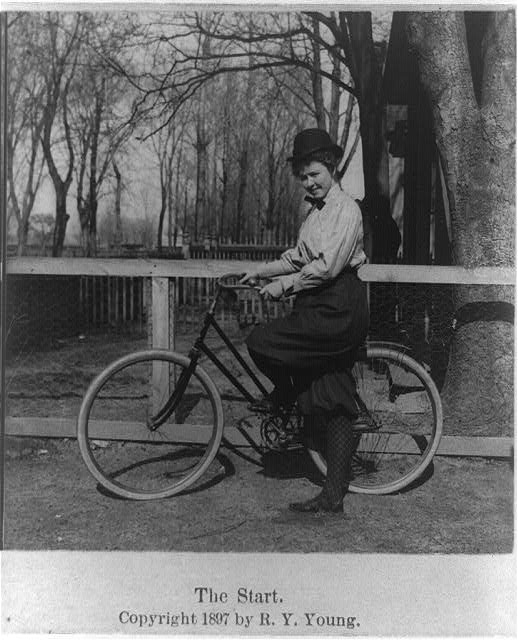
The characteristic bustles of the previous two decades were replaced by bell skirts, puffy sleeves, high collars and open necks. In addition, evening dresses of this decade usually exposed the breasts and shoulders of their owners.
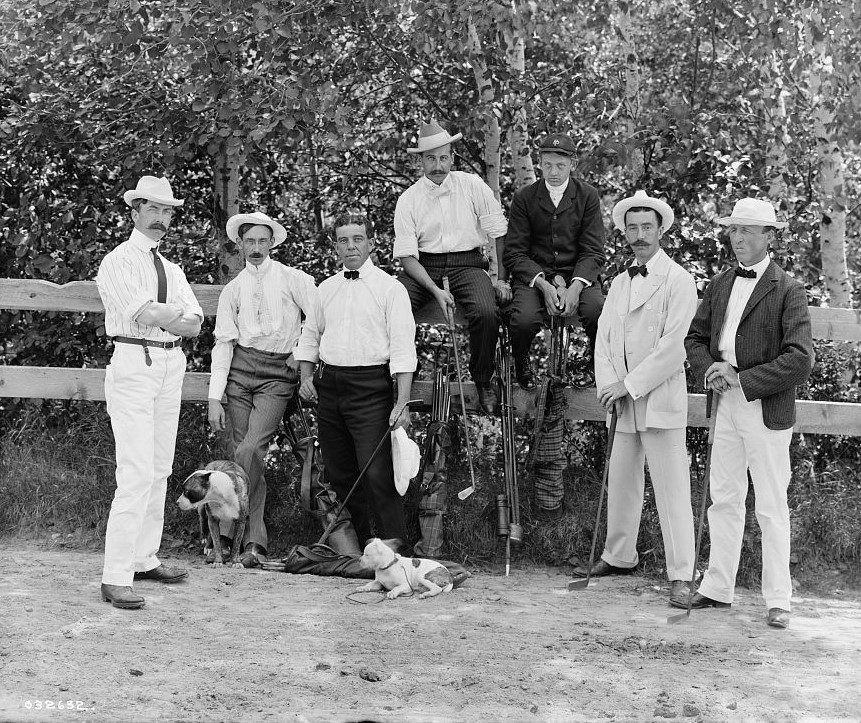
A prominent place in men’s clothing was occupied by rigid high collars. Jackets were more often left unbuttoned and shirts and waistcoats were usually brightly colored. It was very fashionable for men to carry decorative cherry or oak canes when they walked around the city. A coat remained a popular option for daytime clothing.
Economic and social growth automatically increased the demand for clothing. The production of ready-made garments increased together with the expansion of the textile industry. By the beginning of the 20th century, New York had become the center of American fashion.