

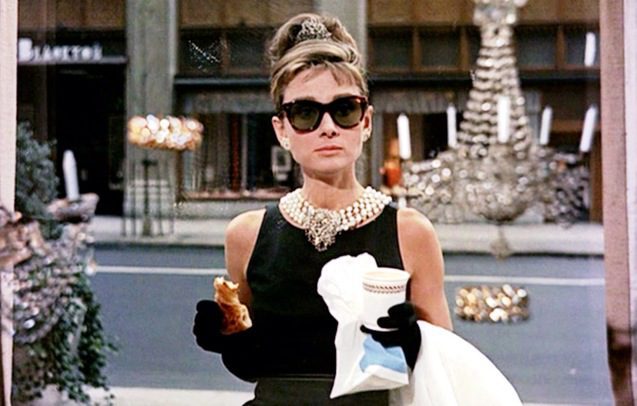
We are all familiar with Audrey Hepburn’s iconic visuals from the film Breakfast at Tiffany’s. Following the film’s release, millions of women longed to put such a coveted Tiffany ring on their fingers. Moreover, the most famous actors, First Ladies, musical performers, royalty and many other well-known people have always chosen Tiffany’s iconic jewelry. Learn more at newyorka.
The luxurious American jewelry company Tiffany & Co. has become synonymous with elegance and prestige. The brand credited with creating the prototype of the engagement ring as we know it has deservedly earned its nickname “The Diamond Kings”. The blue Tiffany branded box, at all times, evoked delight and was a cherished dream.
Quite quickly, the jewelry company Tiffany & Co. has become synonymous with a luxurious lifestyle. Subsequently, their jewels have become an indispensable part of life, while the worldwide popularity of the brand came from the film Breakfast at Tiffany’s. In addition, jewelry has become a favorite accessory for the red carpet of the Hollywood elite. Tiffany & Co. has over 200 stores across the globe, but it has far more fans.
Tiffany & Co., with an estimated net value of 6.55 billion US dollars, has been one of the world’s leading luxury jewelry brands for over two centuries. Headquartered in New York City’s prestigious Fifth Avenue, Tiffany & Co’s flagship store sells luxury jewelry, crystal, china, perfumes, watches, leather goods, accessories, etc.
Next, we take a look back at crucial moments in the long and successful history of Tiffany & Co. We will reveal a few secrets of how the iconic jewelry chain became one of the most beloved luxury brands in America.
The beginning of jewelry history
The legendary jewelry brand Tiffany & Co. dates back to 1837. A young entrepreneur, Charles Lewis Tiffany, along with his friend and business partner John Young, founded a small store called Tiffany & Young on Broadway, New York City. At first, the store provided a wide range of stationery and elegant haberdashery. To keep the business running, they expanded their merchandise to include china, glassware, jewelry and watches.
By 1841, the business had expanded and added a third partner, becoming Tiffany, Young & Ellis. Ellis, who had extensive experience in the European jewelry market, became the company’s chief overseas operator after his trip to the continent. In 1844, the company imported quality Italian and English jewelry, adding to its already respected reputation.
Then, in 1853, its name was shortened to Tiffany & Co. when Charles Tiffany took over and made the company’s emphasis on jewelry. Since then, the company has opened stores in major cities across the globe. Unlike other stores of the time, Tiffany’s explicitly indicated the prices of its merchandise to prevent any haggling over prices. Furthermore, contrary to social conventions of those days, Tiffany’s accepted only cash payments and did not allow purchases on credit, even though most consumers preferred to purchase things in installments. Charles Tiffani was ambitious and bold, demonstrating that business success frequently necessitates a creative mindset.
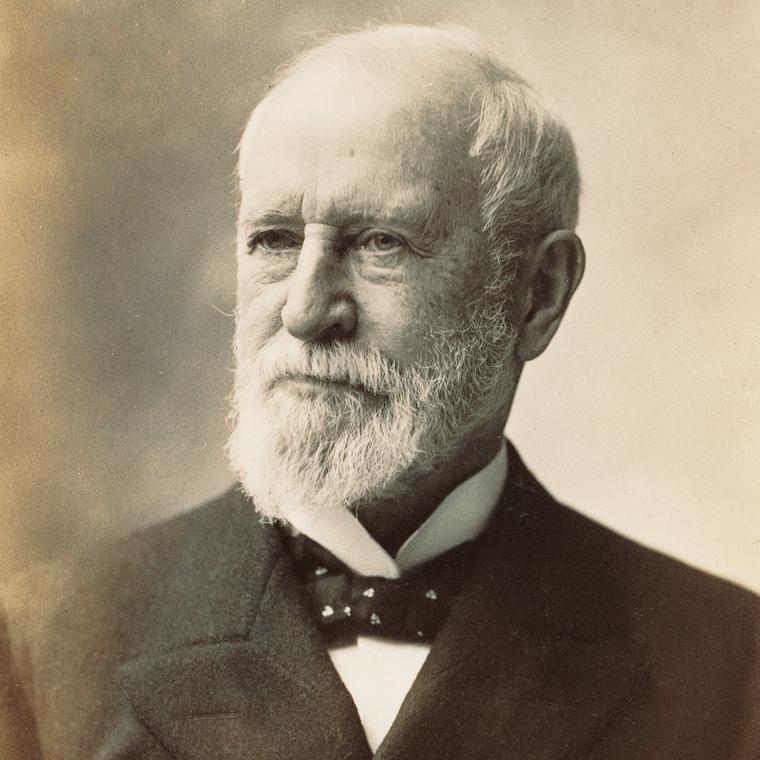
All of this has enabled the company to not only remain in business but to expand significantly. Political turmoil in Europe devalued the gem market in the late 1840s. Tiffany made significant investments in European diamonds, which were later sold at a sizable profit in the United States. For the first time, the American elite started buying jewelry in their home country. That’s where the history of diamonds began.
Tiffany’s Blue Book
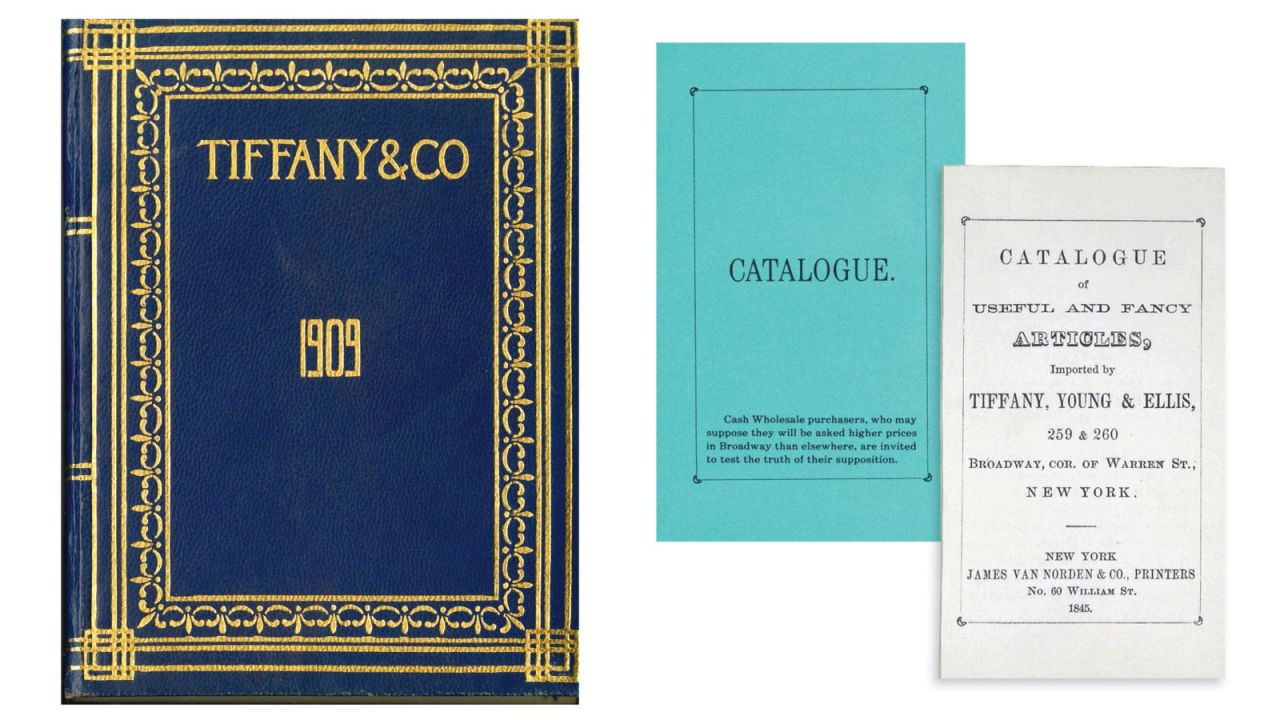
In 1845, the company released their first The Blue Book. Tiffany’s Blue Book made history by being the first direct mail catalog to offer magnificent jewels to Americans’ doorsteps. In other words, it’s contemporary online shopping.
In the decades to come, its pages would become the stuff of luxury legend, introducing American aesthetes to previously unknown treasures. The annual catalog had a signature blue cover and featured products and items that could be purchased by sending a check. These days, catalogs are highly sought after at auction and command great prices, but back then, they were an effective marketing tool.
“The original Blue Book is an important piece of Tiffany’s legacy,” noted the company’s global CEO, Anthony Ledru.
This mail order catalog is still in print today, allowing customers from all over the United States to order the brand’s exquisite jewelry.
“King of Diamonds”
The company built a new store building at 15 Union Square West in Manhattan in 1870. A New York Times article described it as ‘the palace of jewels’.
Tiffany pursued expanding the boundaries of its diamond empire, first through innovative pricing and then through mail order. Charles Tiffany risked his entire income by purchasing diamonds directly from French aristocrats. That contributed to the design of the new American style, which featured a large, clear diamond in the center.
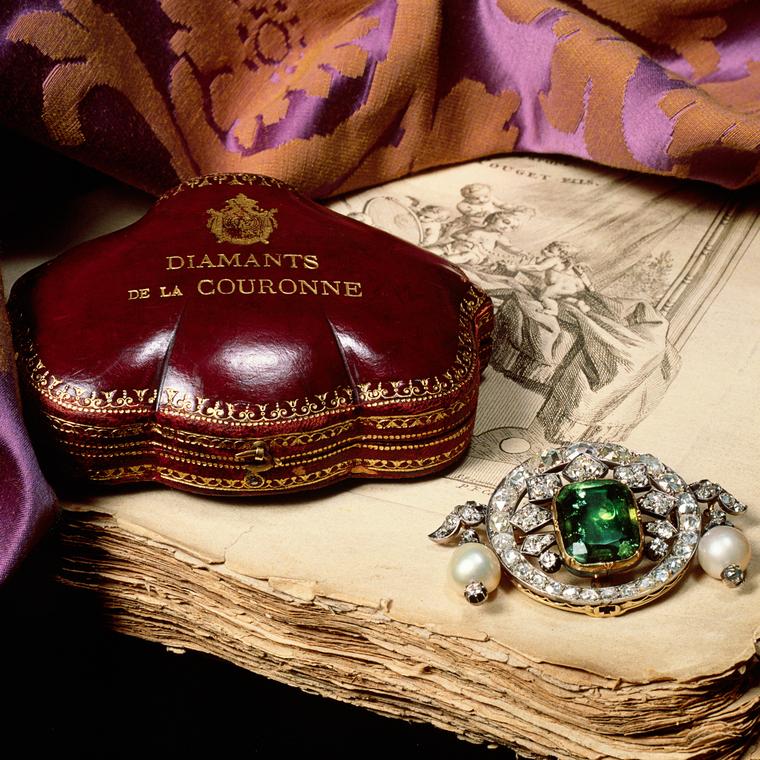
Charles Lewis Tiffany also made headlines in 1887 when he shocked the world by accepting one third of the French crown jewels and earning him the nickname “The King of Diamonds” for doing so.
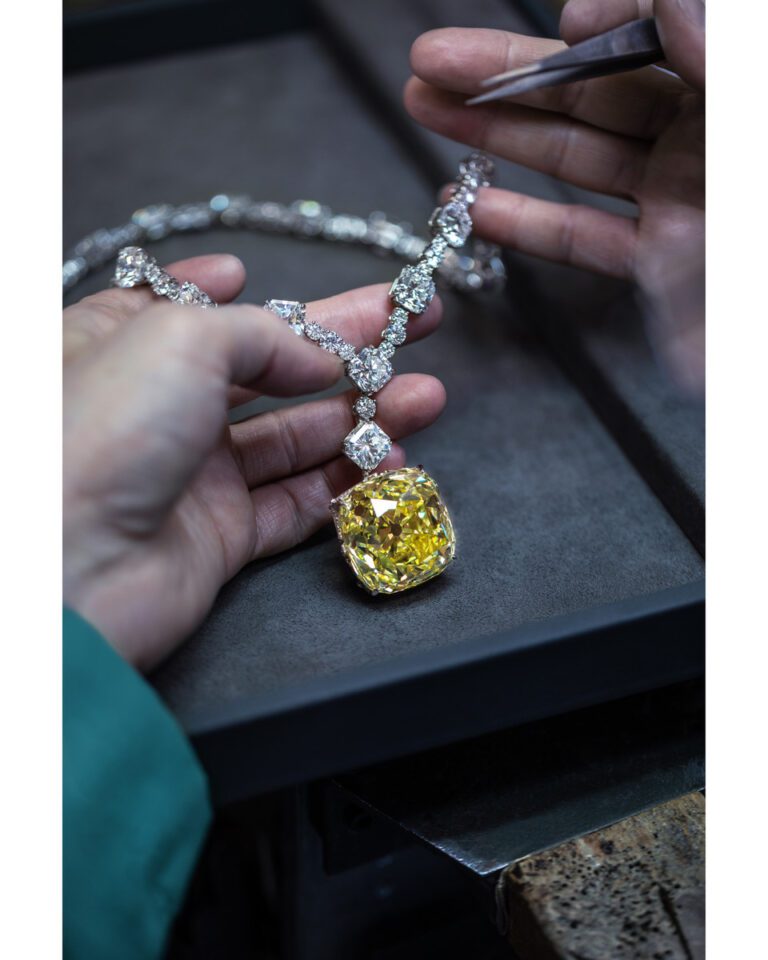
Besides, the company acquired a spectacular 287.42-carat fancy yellow rough diamond from the Kimberley diamond mine in South Africa. A yellow diamond of stunning quality is a symbol of supreme craftsmanship.
It was still 128.54 carats after cutting and was officially named the Tiffany Diamond. It is recognized as the world’s largest and finest yellow diamond that has never been sold. Only four women are known to have worn the diamond during its lifespan. Mary Whitehouse wore it at the 1957 Tiffany Ball. The diamond was later worn by Audrey Hepburn in the 1961 film Breakfast at Tiffany’s. Lady Gaga wore the diamond to the 91st Academy Awards in 2019. Beyoncé wore this necklace in Tiffany’s Fall/Winter 2021 campaign.
The Tiffany Diamond contributed to the jewelry brand’s reputation as the largest venue for luxury and exquisite gemstone beauty.
Tiffany Setting diamond engagement ring
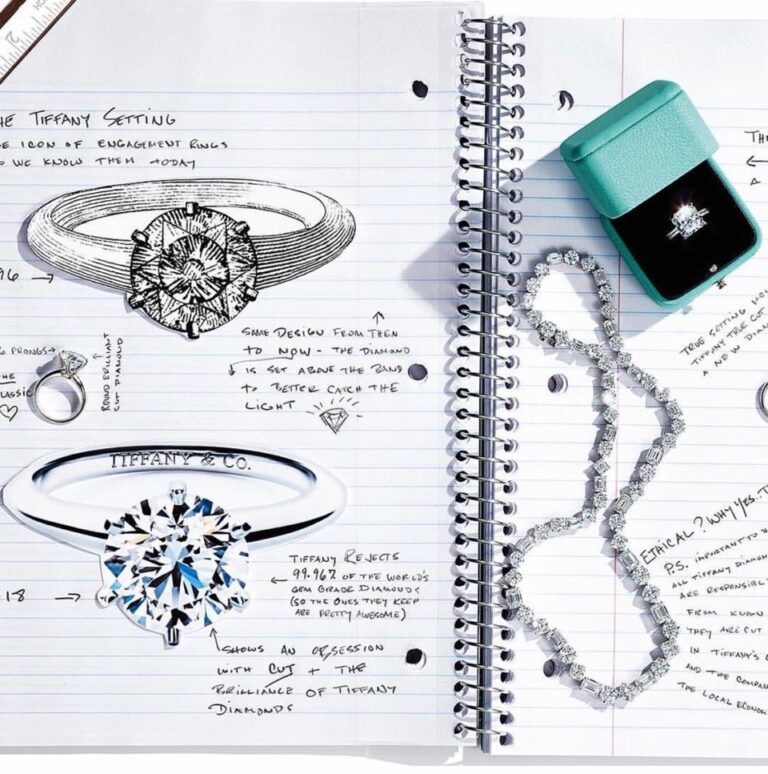
The Tiffany & Co. name has been associated with romance and marriage proposals since 1886. Charles Lewis Tiffany introduced the engagement ring as we know it nowadays.
Before that time, diamond rings were set in bezels, making it impossible to see the purity and brilliance of the gemstones. However, Tiffany’s revolutionary stone setting has not only changed the engagement ring industry but has also enhanced the brilliance and exquisite beauty of the diamonds. The impeccably designed setting is nearly invisible and allows the diamond to shine. The result is an incredible ring that has embodied the world’s greatest love stories for over 130 years.
Innovation and the search for extraordinary gemstones
After the death of founder Charles Lewis Tiffany in 1902, his son Louis Comfort Tiffany took over as the company’s first official design director.
Back then, the Art Nouveau trend was gaining momentum. Louis’ inventive, nature-inspired jewelry made using materials such as glass, diamonds and enamel put Tiffany & Co. at the forefront of this trend. He also formed a Tiffany’s Art Jewelry department in the Fifth Avenue store to provide an opportunity for producing jewelry and precious pieces instantly on the site.
Tiffany & Co. has not only dazzled the world with incredibly brilliant diamonds throughout its history but has also exposed us to a spectacular collection of previously undiscovered colored gemstones. Tiffany’s gemologists continue to travel to the most distant corners of the world in search of the most stunning gemstones. The next step is to design jewelry that honors the legendary Tiffany & Co.