

Café · New York · ⭐ 9.3/10 · 1602 reviews · updated: 2026-08-10 20:44:21
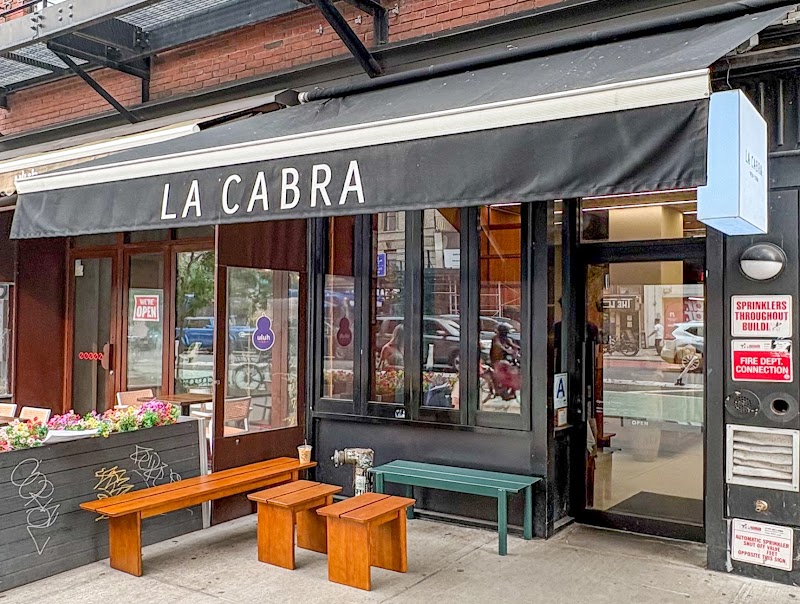
Address: 152 2nd Ave, New York, NY 10003, United States
Denmark exports design, licorice and a very particular idea of what coffee should taste like. La Cabra Bakery brought all three to the East Village and put them in one room. The company began in Aarhus, has been baking in its home city for the better part of a decade, and describes this address as its first venture into New York’s color, noise and bustle — which is a fairly Danish way of saying it moved to Manhattan.
Highlights
- Nordic roasting, done in New York. La Cabra does not ship its coffee across the Atlantic — it set up a roastery in Bushwick and roasts for the American market here, which is why the coffee arrives at this counter fresh rather than air-freighted.
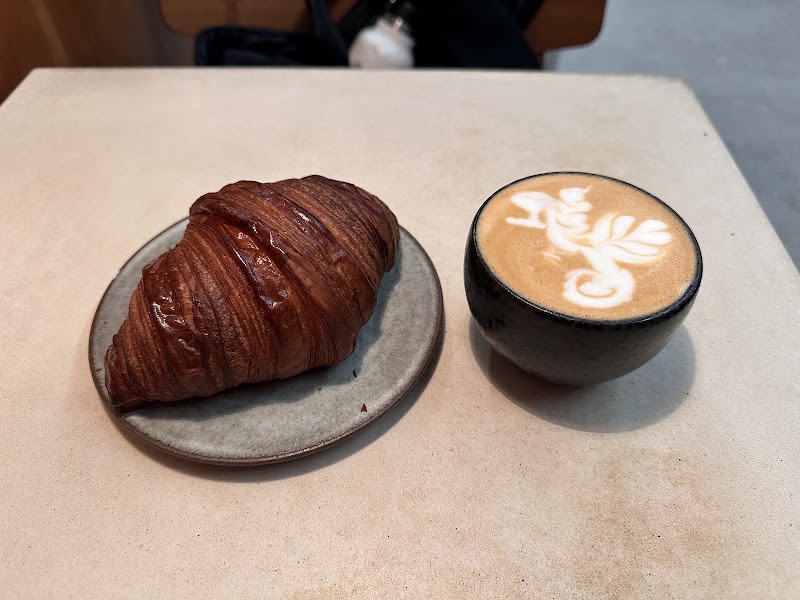
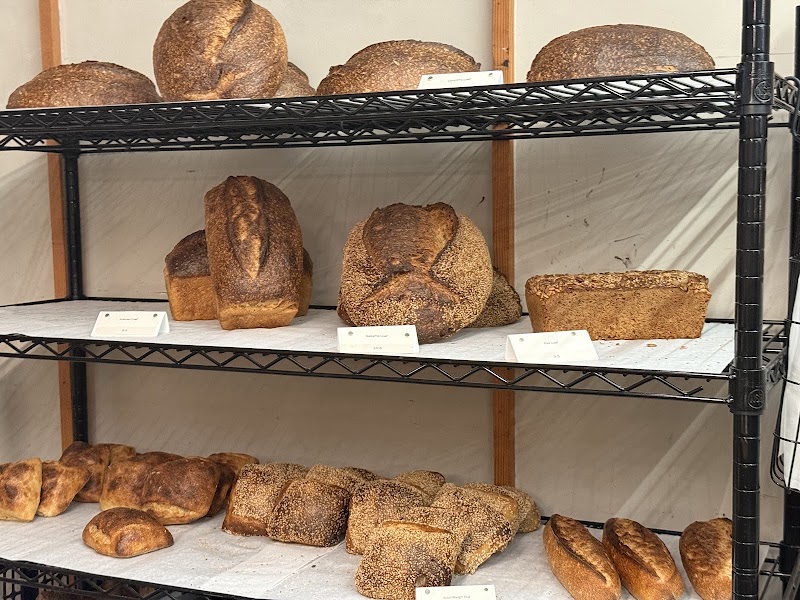
- The bakery is on site, not delivered. Naturally leavened sourdough, hand-laminated croissants and a rotating seasonal range are made in the building. Very few specialty coffee bars in the city can say the pastry and the espresso were both produced under the same roof.
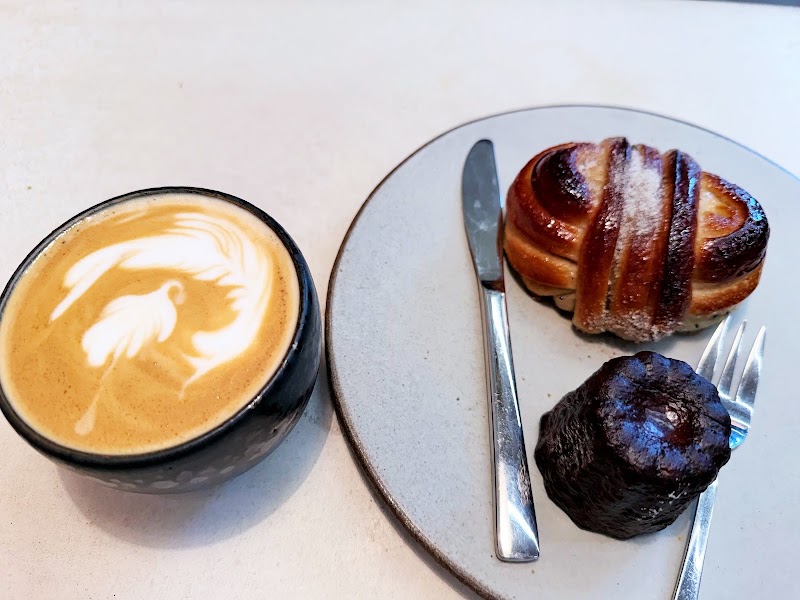
- The cardamom bun is the thing people cross town for. Soft, lightly glazed and unmistakably Scandinavian, it has become one of the East Village’s genuine landmark pastries.
- The sourcing philosophy runs both ways. The company applies the same direct-relationship logic to flour, grain and fruit that specialty coffee applies to green beans — millers and farmers by name rather than a wholesale order.
- The room is a piece of Danish design. Hans Wegner chairs and bespoke KH Würtz tiles running the length of the bar; the fit-out is not café-generic, it is a deliberate importation of a national aesthetic.
- It landed in Little Ukraine. This stretch of the East Village has been the center of Ukrainian New York for generations, so a Nordic bakery here sits among churches, a museum and diner counters that have been serving varenyky since long before specialty coffee existed.
What’s in the cup
La Cabra belongs to the Nordic school, and the difference is obvious from the first sip. The roast is light, the aim is clarity rather than caramel, and the coffees are chosen and roasted to show acidity, fruit and the character of a particular lot instead of burying all of it under roast flavor. If your reference point for espresso is a dark Italian blend, the first cup here can read as tea-like or startlingly bright. That is the intended result, not a mistake, and the counter will tell you as much.
The important structural fact is that this is a roaster, not a café buying somebody else’s beans, and that it roasts on this side of the ocean. Establishing a Brooklyn roastery was the decision that turned a Danish brand into an American coffee company. Coffees are seasonal — the list moves with harvests rather than staying fixed — and everything on the bar is also sold in bags, so a cup you like is a cup you can take home and reproduce.
Both sides of the bar are taken seriously: filter for people who want to taste the lot cleanly, espresso for people who want it concentrated, and milk drinks built on a roast profile that was never designed to hide behind milk. Ordering advice, if you want the house at its most characteristic: drink something black. The milk options are competent, but they are not the argument this company is making.
Who’s behind it
La Cabra was founded in Aarhus by Esben Piper and grew from a single Danish café into a roasting company with a genuine international footprint — Denmark, Bangkok, Oman and now the United States. The New York project was not a franchise handed to a local operator; the company opened here in 2021 and built its North American roasting operation to support it.
What makes the business coherent is that the bakery is not a side hustle bolted on to sell more coffee. La Cabra has been baking in its home city for years, and it states the principle plainly: high-quality raw material drives the bakery exactly as it drives the roastery. The same standard of ingredient obsession that specialty coffee spent twenty years developing gets applied to butter, flour and fruit. That is unusual — most coffee bars treat pastry as a margin product.
What kind of visit it suits
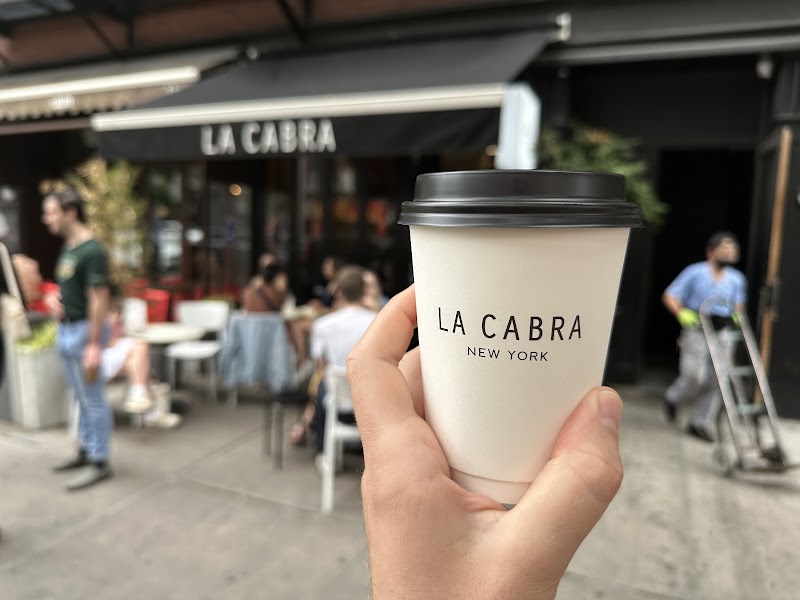
This is a short-visit room, and you should plan for that rather than fight it. The strongest scenario by a distance is the morning stop: a filter or an espresso, a pastry that justifies the walk, twenty minutes at the bar or a table, and out. The second is takeaway, which the East Village’s geography actively encourages — there is a park a few blocks away and a whole neighborhood worth walking through with a bag from here.
For working, temper your expectations. The room is a bakery counter with a queue at peak, the seating is limited, and the furniture is beautiful Danish design rather than an armchair you sink into for three hours. No laptop or Wi-Fi policy has been published, so the honest advice is to treat this as a place to answer a few messages rather than as an office, and to ask at the counter if you are planning a longer sit. If you need a guaranteed working table, the East Village has rooms built for that; this is not primarily one of them.
Where it does excel is a specific kind of meeting: two people, good light, an hour of real conversation, both of you eating something worth discussing. It is also an excellent solo visit if the thing you want is to taste coffee attentively — the bar seats put you in front of the people making it, and the seasonal list gives you something to actually think about. Tables cannot be reserved, which keeps the room democratic and the queue honest.
The room and the atmosphere
The fit-out is the clearest statement of intent in the room: Wegner chairs, custom ceramic tiles along the length of the bar, pale surfaces, nothing shouting. It is calm, considered and slightly austere in the Scandinavian way — a space that assumes you came for the product rather than for the decor to entertain you. In an East Village full of deliberately scruffy rooms, the contrast is part of the appeal.
It is also, reliably, busy. The bakery drives volume that a pure coffee bar never would, so expect movement, a queue at the counter and a sound level that rises with the crowd rather than a hushed tasting-room hush. The mix skews local — neighborhood residents, students from the nearby universities, people who plan their morning around the pastry — and turnover is quick enough that a seat usually appears if you are patient.
What goes with the coffee
Here the answer is unusually strong, because the food is not an accessory. Everything is baked in house: naturally leavened bread, laminated pastries made by hand, and a seasonal range that changes with what is available rather than sitting static all year. Bread is sold as bread, not only as a vehicle for a sandwich, which tells you the bakery is a real bakery and not a display case.
The practical implication is that this is one of the few entries on any coffee list where you can plan the visit around the food and let the coffee follow. It is not a restaurant and there is no full kitchen behind the counter — but as a breakfast, and as the place you collect a loaf on the way home, it does something most cafés cannot.
When to come
Come early if you have a specific pastry in mind. A bakery that makes things by hand in limited batches sells out of the popular items, and the seasonal range in particular is a first-come proposition. The opening stretch of the day is also when the room is calmest and the light is best.
Weekend late mornings are the peak, and in this neighborhood that means a queue out the door and every seat occupied — the East Village treats this as a destination rather than a convenience. Weekday afternoons are the quiet window: the students are in class, the morning rush is spent, and the room briefly becomes the calm Scandinavian space the design intends it to be.
Getting there
The bakery sits in the East Village, in the quarter long known as Little Ukraine — the historic center of Ukrainian New York, with its churches, its museum and its old diner counters within a few minutes’ walk. Tompkins Square Park is a short stroll east and the university blocks begin immediately to the west.
For the subway, the nearest options are the Astor Place station on the local east side line and the 8th Street station a block or so further, with the First Avenue station on the L line covering anyone arriving from Brooklyn. All of them leave you a short and pleasant walk away, through some of the densest low-rise streetscape in Manhattan. Buses run directly past on the avenue if you would rather stay above ground.
Good to know
Two expectations worth setting. First, the coffee is light-roasted in the Nordic style — if you want a dark, chocolatey, traditional espresso, you will find this bright and possibly acidic, and no amount of milk changes the underlying philosophy. Second, tables cannot be booked, so at peak the system is patience rather than planning.
The honest weakness is capacity. This is a small, popular room in a neighborhood with a large appetite for exactly what it sells, which means queues, occupied seats and sold-out pastries are all normal rather than exceptional. Treat the visit as a good stop rather than a guaranteed base for the afternoon, and take advantage of the fact that everything — beans, bread, pastry — travels well if the room is full when you arrive.
Questions and answers
Is the coffee roasted in Denmark and shipped over?
No. La Cabra built a roastery in Brooklyn and roasts for the American market locally, which is the difference between a fresh coffee program and an imported one. The company itself began in Aarhus and still roasts in Denmark for its European cafés.
Do they bake on site?
Yes — naturally leavened sourdough, hand-laminated croissants and a rotating seasonal range are made in the building. That is genuinely rare among specialty coffee bars, most of which buy pastry in.
What should I order the first time?
A cardamom bun and something black — a filter coffee or a straight espresso. The bun is the item the neighborhood queues for, and black coffee is where a Nordic light roast shows what it is actually doing.
Why does the coffee taste so different from what I am used to?
Because it is roasted light, in the Scandinavian manner, to preserve acidity and the character of the specific lot rather than to develop roast sweetness. It is a stylistic position, not an accident, and it is the whole reason this roaster has an international reputation.
Can I work here for a few hours?
It is not the room’s strength. Seating is limited, the bakery keeps the counter busy, and no laptop policy has been made public — so plan a short visit, and ask at the counter before settling in for a long one.
Can I reserve a table?
No. The bakery does not take table reservations, so arriving outside the weekend peak is the only real strategy for getting a seat.
Is it good for a conversation?
For a focused hour between two people, yes — the room is calm by design and the food gives you something to talk about. For a large group or a long private discussion, the scale of the space works against you.
What is the neighborhood like around it?
This is the East Village at its most layered: the historic heart of Ukrainian New York, with a park, university blocks and one of the city’s densest concentrations of small food businesses all within a few minutes on foot.
Opening hours
| Day | Hours |
|---|---|
| Monday | 07:00–18:00 |
| Tuesday | 07:00–18:00 |
| Wednesday | 07:00–18:00 |
| Thursday | 07:00–18:00 |
| Friday | 07:00–18:00 |
| Saturday | 08:00–18:00 |
| Sunday | 08:00–18:00 |
Photos
Visitor reviews
Reviews last updated: 2026-08-10 20:44:21
Data is refreshed monthly. Sources: newyorka.info and editorial picks based on reviews.
Дійсно чудовий продукт. Кортадо тут чудовий. Обслуговування чудове. Тут безліч випічки, включаючи канельєс, яка є однією з моїх улюблених. Я замовив багет на заквасці. Він був надзвичайно важким і смачним. Тут лише кільк…
Кафе та пекарня з однією з найдивовижніших випічок, які я коли-небудь куштував у Нью-Йорку!
Ми прийшли сюди в суботу вранці, щоб просто взяти випічку на сніданок, і хоча йшов досить сильний дощ, це не завадило людям при…
La Cabra – безперечно одна з моїх улюблених мереж кав’ярень на Мангеттені. Вони постійно пропонують відмінну якість, і ця кав’ярня в Іст-Віллідж не є винятком.
Оскільки заклад розташований поруч з Нью-Йоркським універси…
Важко знайти хліб, каву та чай такої високої якості. Атмосфера спокійна, і я, чесно кажучи, міг би залишитися на ще один флет вайт, як я зазвичай роблю в Іспанії. У них є свіжоспечені багети, такі ж, як продаються у Фран…
Ням! Я прийшла сюди, щоб спробувати знамениту булочку з кардамоном та іншу випічку. Булочка з кардамоном мала чудову, пружну текстуру, але я не впевнена, чи сподобався мені смак кардамону. Круасан з шинкою та сиром був н…