

Café · New York · ⭐ 9.1/10 · 2722 reviews · updated: 2026-08-10 16:25:51
Address: 708 3rd Ave, New York, NY 10017, United States
Midtown East is where New York keeps its office towers, its commuter terminal and its expense-account lunches, and it is not where anyone expects to find a café that could be lifted whole out of Melbourne and dropped back down without anybody noticing. Little Collins has been doing exactly that for over a decade — an Australian room in the least Australian part of the city, built by a lawyer who quit the law to learn how to pull a shot.
Highlights
- A genuine Melbourne transplant. The name comes from a street in central Melbourne, and the model — coffee taken seriously, food taken seriously, no reverence about either — is imported wholesale rather than borrowed as a theme.
- It brought the city its first Modbar. The under-counter brewing system that leaves only chrome taps above the bar made its New York debut here, which cleared the sightline between the person making the coffee and the person drinking it.
- The kitchen is a real kitchen. Cooked breakfast, eggs, sandwiches — this is a café where you can eat a proper meal rather than a coffee bar with pastries on the side.
- Brewing beyond the espresso machine. Filter is a first-class citizen here, with pour-over, immersion and other manual methods available alongside the espresso menu.
- Founded by a career-changer. Leon Unglik left corporate law, spent a year and a half working as a barista and a year running a Brooklyn café before opening his own room — an unusually long apprenticeship for an owner.
- Walk-ins only. Nothing is bookable, which keeps the room democratic and means the queue at lunchtime is simply part of how the place works.
What’s in the cup
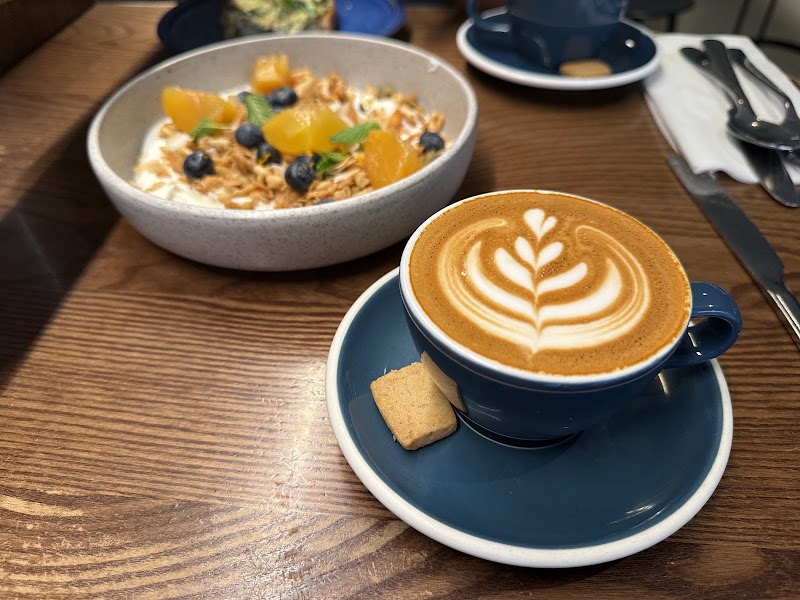
The Australian school of coffee is a real and specific thing, and Little Collins is the cleanest example of it in this part of Manhattan. Its defining feature is the flat white as a default order rather than a curiosity: espresso built deliberately to be drunk with milk, roasted for sweetness and body rather than for the bright, tea-like acidity that a Nordic-leaning filter bar chases. That is a whole philosophy about what a morning coffee is for, and it is why Australians in New York have historically gravitated to a handful of specific addresses, this one included.
Little Collins does not roast. It buys from an established specialty roastery rather than running its own production, and there is no pretending otherwise — the craft here is on the brewing side, not the roasting side. That decision has a practical logic behind it: a café doing this volume of both coffee and food in an office district needs the espresso to behave identically at the first order and the four-hundredth, and a settled relationship with one roastery is how that is achieved. The trade-off is that you are not going to find a rotating gallery of experimental microlots on the board.
What you will find is unusual breadth of method. Filter is treated as a real category rather than as a grudging concession, with manual brewing available alongside the machine — pour-over cones, immersion brewers and the rest — which means someone who wants their coffee black and expressive has genuine options rather than a token drip jug. And the Modbar is not just a gadget: by moving the brewing hardware under the counter it removes the wall of chrome that usually separates a barista from a customer, so the making of the drink happens in the open, at eye level. That is a design decision about hospitality as much as about coffee.
Who’s behind it
Little Collins was founded by Leon Unglik, who came to coffee from corporate law. He left that career in 2009 and did something most café owners skip entirely: he learned the trade from the bottom, spending around eighteen months working as a barista and then a year managing a Brooklyn café for an Australian coffee group before opening a room of his own. That apprenticeship is legible in the finished product — the attention that goes into the details of the menu, the music and the way the staff are turned out reads as someone who watched a lot of shifts from the wrong side of the counter before designing his own.
The stated motivation is simple and, for anyone who has lived abroad, immediately recognizable: the founders fell for New York and missed the café culture of home. Little Collins is the attempt to reconcile those two things in one room — Melbourne’s approach to coffee and unfussy food, delivered at New York speed and volume, with the slightly cheeky Australian register kept intact. The café has been part of Midtown for over a decade and has shifted address within the district in that time, but the idea has not moved at all.
What it’s for
The dominant scenario here is the weekday meeting that is not quite a meeting — the informal one-to-one, the coffee before an office visit, the breakfast where something actually gets decided. Midtown East runs on those, and Little Collins is one of the few places in the immediate area that makes them pleasant rather than merely possible. Two people can sit with a flat white and a plate of eggs and talk properly, which is more than can be said for the chain outlets and hotel lobbies that make up most of the competition here.
For laptop work, the honest answer is that this is a café with a kitchen in a dense office district, and that shapes everything. The room turns over: breakfast is brisk, lunch is a genuine rush, and a table occupied by one person and a screen is a table not serving a two-person lunch. Nobody will be rude about it, but the realistic window for a long working session is the flat stretch of the mid-afternoon, once lunch has cleared. Anyone planning to spend four hours writing should treat that as the plan rather than assuming it will work at midday.
For eating alone it is genuinely good — counter and small-table seating, a menu that works for one, and staff whose register is friendly rather than formal. And for takeaway it is exactly what the surrounding towers need: a fast, well-made cup that is not a chain product, collected on the way in. Weekends are the wild card. The office population disappears and the neighborhood empties out, which makes a Saturday or Sunday visit the quietest and most relaxed version of this café available.
The space
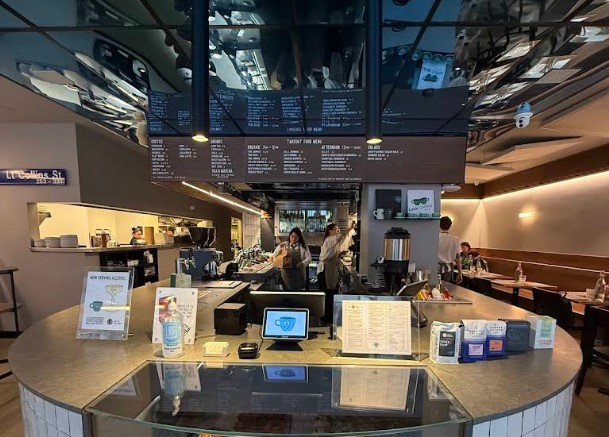
The interior is sleek and lightly industrial, and it is closer to what you would expect in Tribeca or a Brooklyn side street than to anything else on the block. It has been described as an anomaly for the district, which is fair: the design work is visible, from the fit-out to the music to the way the team is presented, and it is the deliberateness rather than the expense that registers. There is a mascot, Little Collin, which tells you the place does not take itself entirely seriously.
Scale is intimate rather than cavernous — this is a café, not a dining room, and at peak it fills. The clientele is a mix of the surrounding offices and a durable Australian contingent who have been coming for years; the room is regularly described as being full of regulars, which is a rare compliment in a district where most food and drink is consumed by strangers passing through. Noise rises with the lunch rush and settles again afterwards. There is no terrace or garden, and this stretch of Midtown does not really have a sidewalk café culture to plug into, so the interior is the whole experience.
Beyond coffee
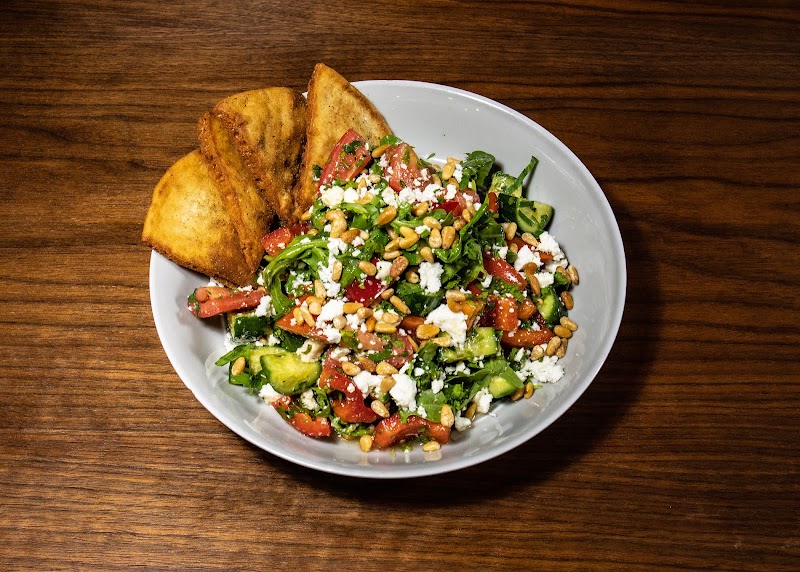
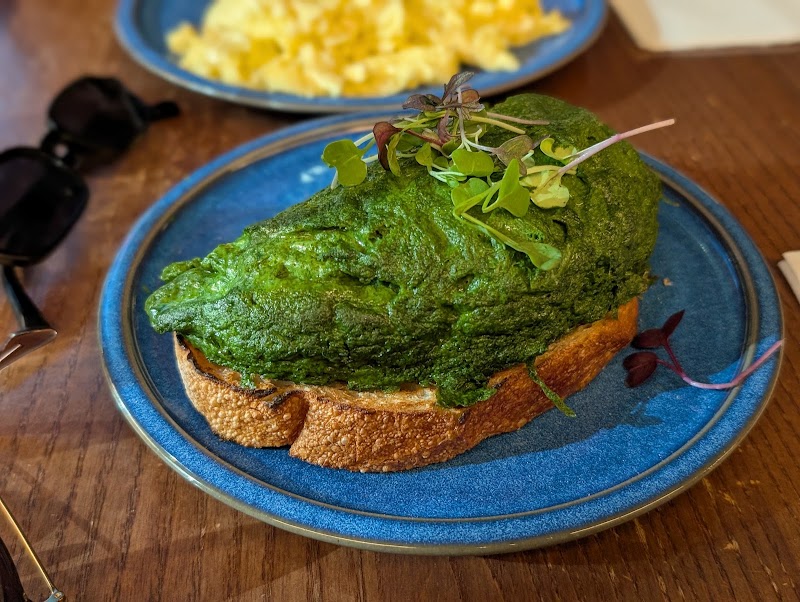
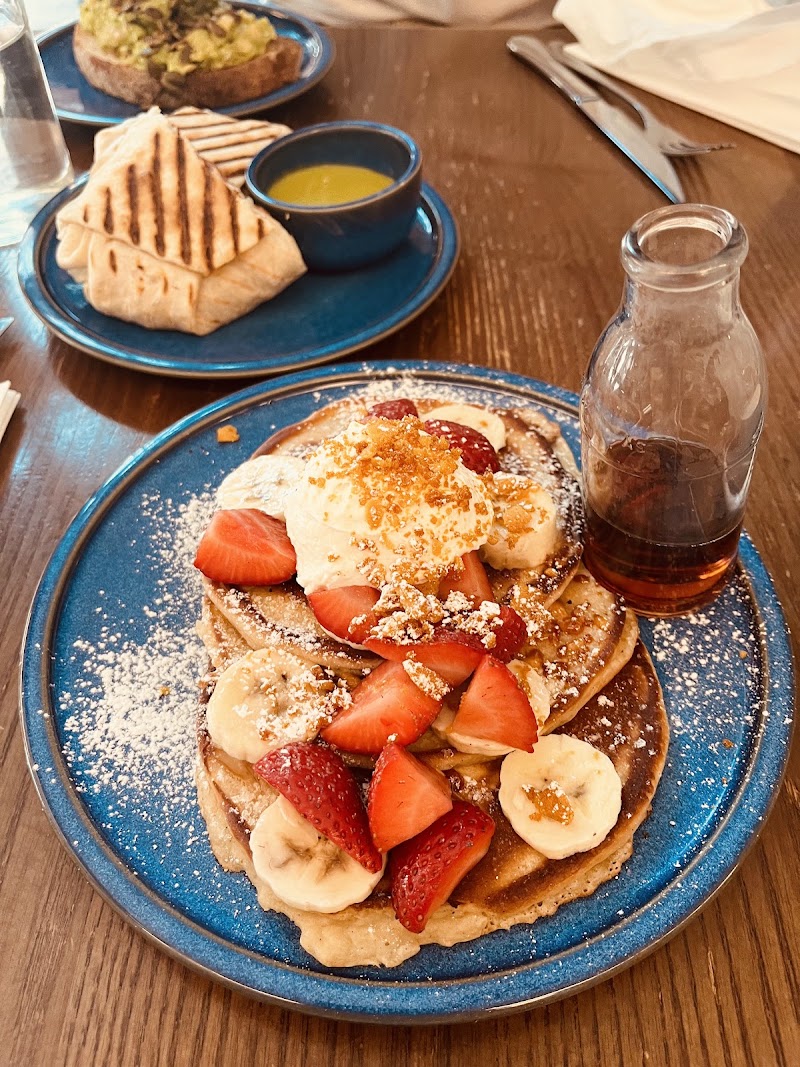
Food is not an afterthought here, and that is the main structural difference between Little Collins and almost every specialty coffee bar in the city. There is a working kitchen turning out cooked breakfast and lunch — eggs done properly, sandwiches, the Australian brunch canon including the avocado-and-feta toast that Melbourne exported to the world. The dish names carry the house sense of humor, which is a small thing that tells you a lot about the register the café is aiming for.
The practical consequence is that this is somewhere you can plan a meal around rather than a coffee stop you supplement elsewhere. Portions and prep are designed for people with somewhere to be, so the food arrives quickly and is built to be eaten without ceremony. Catering is offered as well, which in this neighborhood mostly means feeding meetings in the towers nearby. For anyone who came for coffee alone, the pastry and counter offer is there too, but it is the kitchen that makes the room worth planning around.
When to come
The café opens before the working day starts and it closes in the evening rather than running late, which makes it a daytime proposition end to end. The first wave is commuters coming out of the terminal, the second is the office breakfast trade, and the third is a lunch rush that is the busiest and least comfortable stretch of the day if what you wanted was a quiet sit. The mid-afternoon is the calm window, and it is when the room is at its most pleasant.
Weekends behave completely differently from weekdays here, and in the visitor’s favor. Midtown East empties out when the offices close for the week, so a weekend morning gives you the same café with a fraction of the pressure — this is the single best piece of timing advice for the place. If your plan involves lingering, come on a day when nobody nearby is working.
Getting there
The café sits in Midtown East, a short and level walk from Grand Central Terminal, which is the obvious landmark and the obvious approach. The 4, 5, 6, 7 and the shuttle all come into the terminal, which puts the shop within easy reach of most of the system with a single change. From the north and east side of the district the E and M drop you a few minutes away, and the north–south bus routes along the avenues run past the door. Anyone arriving on a commuter train from Westchester or Connecticut is within a very short walk, which explains a good part of the morning trade. The United Nations complex and the surrounding tower cluster are the other reference points if you are navigating by sight rather than by map.
Good to know
Two honest caveats. The first is that this is a Midtown café operating at Midtown pressure. It is small, it is popular, it does not take bookings, and at lunch on a weekday you will queue. That is not a flaw in the operation so much as a consequence of putting a well-run independent room in a district with tens of thousands of office workers and very few good alternatives.
The second is for coffee purists: Little Collins does not roast its own, and the bean program is a settled relationship rather than a rotating showcase. If your idea of a great café is a board of four experimental lots changing every fortnight, this is not that place. What it offers instead is the Antipodean version of excellence — consistency, a flat white that is genuinely correct, a filter menu that is not an afterthought, and food good enough to make the visit a meal. If you have spent time in Melbourne and have been quietly disappointed by New York cafés ever since, this is the address people send you to.
Questions and answers
Why is it called Little Collins?
It takes its name from a street in central Melbourne. The café is a deliberate transplant of Melbourne café culture, so the name is a statement of intent rather than decoration.
Do they roast their own coffee?
No. Little Collins buys from an established specialty roastery rather than running its own roasting operation. The craft here is in the brewing and the service, and the consistency that comes from a settled supply relationship is the point.
What is a Modbar and why does it matter?
It is a brewing system that puts the machinery under the counter and leaves only chrome taps on top. Little Collins was the first café in New York to install one. The practical effect is that nothing blocks the view between the barista and the customer, which changes how the interaction feels.
Can I get a proper meal, or is it just coffee and pastry?
There is a working kitchen doing cooked breakfast and lunch, including the Australian brunch staples. This is a café you can plan a meal around, which is unusual among specialty coffee rooms in the city.
Is it a good place to work on a laptop?
Mid-afternoon on a weekday, or any time at the weekend, yes. During the breakfast and lunch rushes the room needs its tables and you will feel it. Nobody will move you along, but the timing does the work that a policy otherwise would.
Do they take reservations?
No — walk-ins only. At the weekday lunch peak that means a queue, so build a few minutes into the plan or come outside the rush.
Is it worth coming at the weekend when the district is empty?
It is arguably the best time. Midtown East clears out when the offices close for the week, so you get the same café with a fraction of the pressure and a much better chance of the table you want.
What should I order the first time?
A flat white, because it is the drink the whole Australian approach is built around and the clearest test of whether this style suits you. If you drink coffee black, ask what is on filter — it is treated as a real category here rather than as an afterthought.
Opening hours
| Day | Hours |
|---|---|
| Monday | 07:00–16:00 |
| Tuesday | 07:00–20:00 |
| Wednesday | 07:00–20:00 |
| Thursday | 07:00–20:00 |
| Friday | 07:00–18:00 |
| Saturday | 07:30–18:00 |
| Sunday | 07:30–18:00 |
Photos
Visitor reviews
Reviews last updated: 2026-08-10 16:25:51
Data is refreshed monthly. Sources: newyorka.info and editorial picks based on reviews.
Wow, great coffee and the Green Eggs and Damn! Was phenomenal. Ate in, service was kind and friendly. Got another coffee as a take away which was just as good. Thank you Little Collins, it was so great to find coffee and…
Чудове місце для сніданку/бранчу в центрі міста! Дуже людно, тому, можливо, доведеться зачекати, але воно того варте. Ми замовили шматочок оливкового пирога, шашуку та гриби на тості з закваски. Все було дуже смачно! Кав…
Коли ми з Крісом приїхали, у Літл-Коллінз було досить людно. Ми зустрічали гостя, який трохи запізнювався, і нам довелося чекати, поки прибуде вся компанія, перш ніж нас можна було посадити.
Як тільки ми сіли за стіл, вс…
Обожнюю це місце. Черга була занадто довга, тому ми замовили їжу на винос. Наше буріто та сендвіч BEC були чудовими. Кава була чудова. Обслуговування було чудовим. Ми стояли біля кухні та бачили, як повз нас проносили ст…
Справді неперевершене місце в місті. Кожна страва, яку нам довелося скуштувати, була дуже смачною, а кава приготована ідеально. Приміщення гарне, хоча може бути трохи незатишним і майже завжди людно. Тим не менш, це спра…