

In February 1996, at the age of 104, the once-famous model Audrey Munson passed away in a New York state psychiatric hospital. She was buried in an unmarked grave and, for a time, was all but forgotten. In reality, Munson lived on among New Yorkers, immortalized in bronze statues and on film. Learn more at newyorka about the life of the woman now known as America’s first supermodel.
The Future Star’s Early Life
Audrey Marie Munson was born on June 8, 1891, in Rochester, New York. Her father, Edgar Munson, worked as a streetcar conductor before getting into real estate speculation. Her mother, Katherine, was of Irish descent. When Audrey was eight, her parents divorced, and she moved with her mother to Rhode Island.
From a young age, the girl’s beauty turned heads. A story that has survived through the years tells of a young Audrey asking a fortune-teller about her future. The woman looked closely at her beautiful, well-defined features and said that she would be loved and famous, but would lose it all. Munson later came to see this prediction as a curse.
In 1909, she and her mother settled in New York City. The girl dreamed of becoming an actress and a chorus girl, and she soon landed her first minor role on Broadway in a play called “The Boy and The Girl.” She also appeared in a few films during this period. Munson was talented and capable, and she likely would have continued down this path, but her life was changed by a single walk down Fifth Avenue.
A Modeling Career
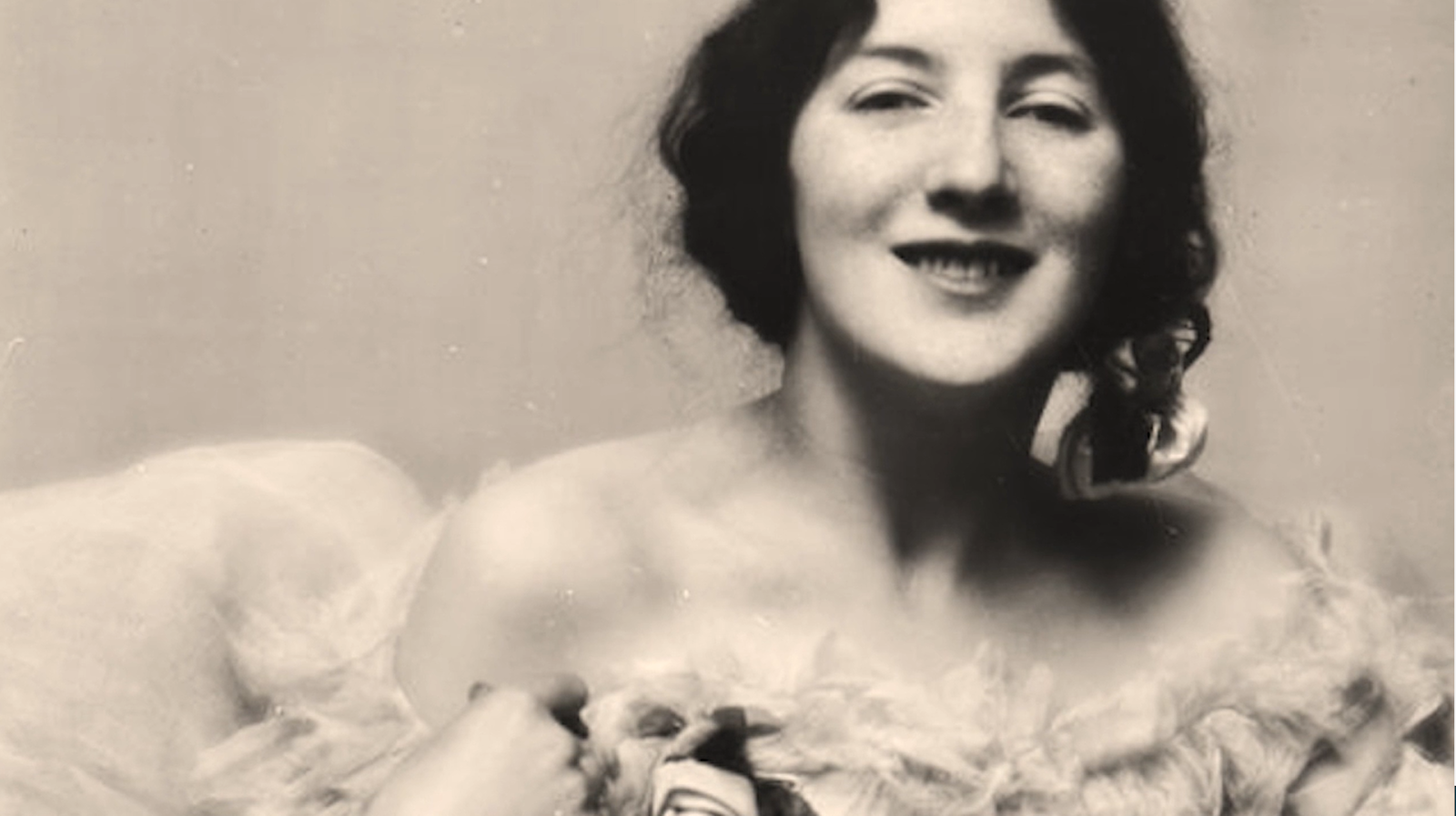
Audrey was strolling through the city with her mother when she caught the eye of photographer Felix Benedict Herzog. He invited her to pose for him, and she eagerly accepted. Through her new friend, she was introduced to many figures in the contemporary art world. Other artists began to invite Audrey to pose for them. Muralist William de Leftwich Dodge offered her work and then recommended her to the sculptor Isidor Konti, for whom she posed nude for the first time.
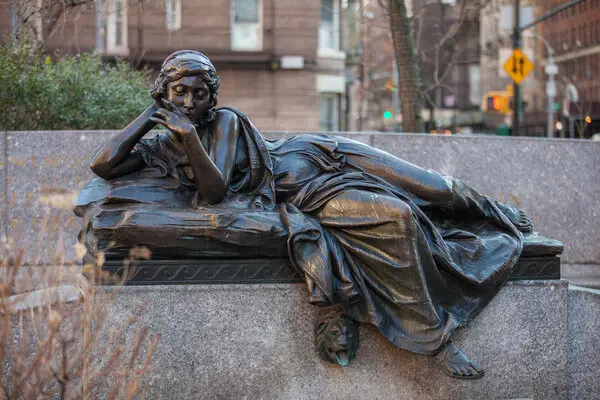
Konti’s marble statue “Three Graces,” for which Munson modeled, was displayed at the Hotel Astor in Times Square in 1909. Over the next decade, she became the most sought-after model among American sculptors, posing for countless statues, monuments, and sculptures. During this period, she became known as “Miss Manhattan,” as her sculpted likeness appeared all over the city.
In 1915, Alexander Calder, the director of sculpture for the Panama-Pacific International Exposition, invited Munson to pose for several sculptures dedicated to the event. After this, the model was also often called the “Panama-Pacific Girl.”
Audrey Munson on Film
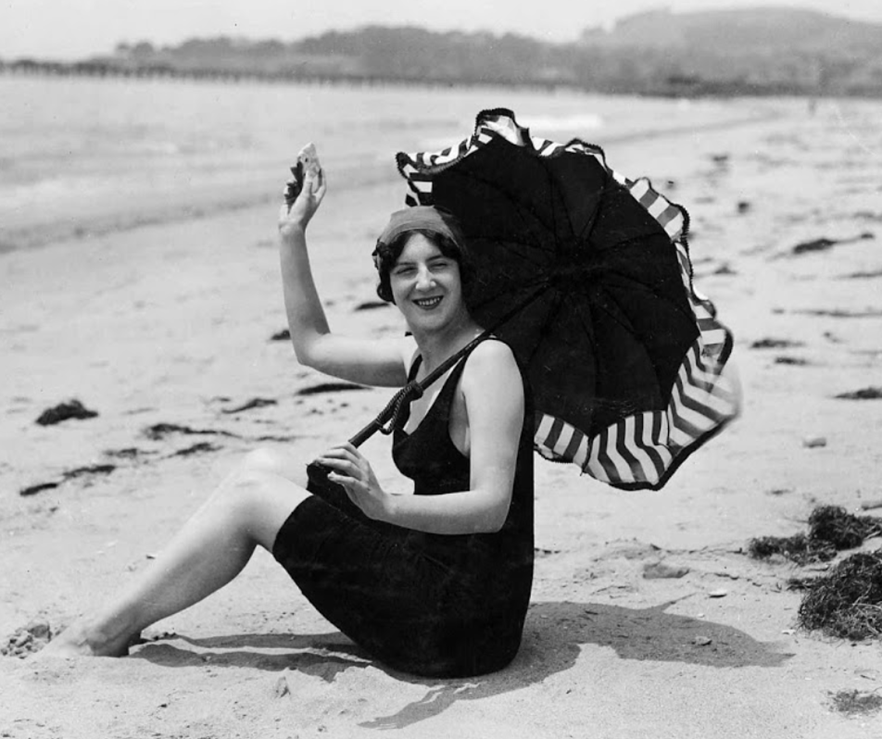
The model’s popularity led her to the world of cinema, which was rapidly developing at the time. Munson starred in several silent films. Her first was “Inspiration” (1915), a story about a sculptor. In the film, Audrey appeared nude, one of the first times this had happened in American cinema history. This fact made the movie highly controversial among critics, but it was a box office success.
In 1916, Munson’s second film, “Purity,” was released. It survives to this day, having been rediscovered in 1993 in a French collection of “pornography.” A third picture, titled “The Girl o’ Dreams,” was completed the same year, but it is uncertain whether it was ever released in theaters.
Scandals and the End of a Career
During this period, Audrey was living in New York with her mother in a Manhattan boarding house owned by a Dr. Walter Wilkins. The owner allegedly fell in love with the young woman and murdered his wife as a result. Audrey and her mother immediately fled the city, but they were tracked down by the police and interrogated. The women were eventually released and left for Canada. Munson denied having any romantic relationship with Wilkins. The man was sentenced to death by the electric chair but committed suicide in his prison cell.
The scandal that erupted around Audrey Munson effectively destroyed her modeling career. She either couldn’t or wouldn’t find other work and, for a time, lived off her mother’s support. Eventually, she took a job as a store cashier.
In 1921, Hearst’s Sunday Magazine began publishing articles under Audrey Munson’s name in its Sunday editions. Titled “Queen of the Artists’ Studios,” they recounted interesting and humorous episodes from her modeling career. That same year, producer Allen Rock told the press he had paid the actress $27,500 for the lead role in a film called “Heedless Moths.” However, Munson denied this information and filed a lawsuit against Rock. The investigation revealed that the articles in Hearst’s Sunday Magazine were not written by Audrey but by a hired journalist.
None of this helped to restore her reputation, but Munson didn’t give up. She decided to conduct a nationwide search for the perfect man to marry, only to later announce that she did not want to get married after all. In the fall of 1921, she was arrested at the Royal Theater in St. Louis for appearing nude in a rerelease of the film “Purity.” Audrey and her manager were acquitted, but a film career was now little more than a dream. The following year, the star attempted suicide but was saved.
Treatment, Final Years, and Death
It’s unclear what Audrey Munson did in the following years, but in 1931, her mother petitioned a court to have her daughter committed to a psychiatric hospital. Munson was admitted and remained at the St. Lawrence State Hospital for the Insane in Ogdensburg, New York. For the next several decades, she was treated for depression and schizophrenia. Her only visitor was her mother.
In the 1950s, the former star of the fashion and film worlds was still remembered, as evidenced by mentions in the memoirs of cultural figures. However, as Munson herself faded from the world, so did the memory of her.
Her mother passed away in 1958. For more than 25 years after that, no one visited Audrey in the hospital or inquired about her condition, which, unfortunately, did not improve but only worsened. In 1984, her step-niece, Darlene Bradley, found her aunt. By that time, Audrey Munson was 93 years old.
The niece arranged for her aunt to be transferred from the psychiatric hospital, which was set to close, to a nursing home in Massena, New York. From there, Audrey Munson would often sneak out to a nearby bar, and the staff had to constantly look for her. Because of this, she was transferred to another psychiatric facility.
The former star lived on. At 100, she had lost nearly all her teeth, as well as her hearing. Her mental state was not good, but she had few other physical problems. Shortly after her 100th birthday, she broke her hip. She lived for another four years and died on February 20, 1996.
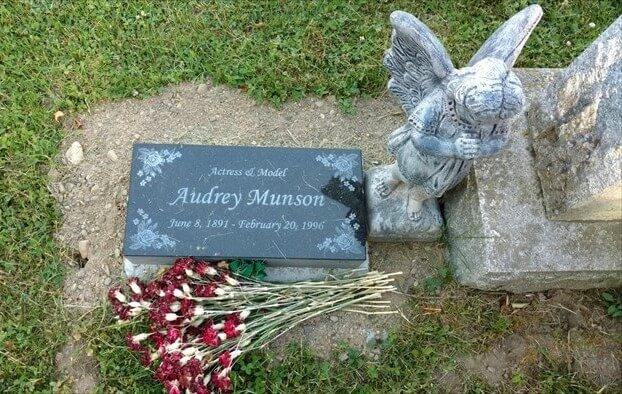
Only one local newspaper reported the death of the former “Miss Manhattan” and “American Venus.” Audrey Munson was buried in an unmarked grave in New Haven Cemetery in New York. It wasn’t until 2016, two decades after her death, that a headstone was placed on her grave, and the memory of Audrey Munson was restored. Her sculpted images can still be found in various corners of New York City. She was the model for statues displayed on the Columbia University campus, in Central Park, at City Hall, and in many other famous locations.